
Designing for Disassembly: Can Buildings Become Material Banks?
What is Design for Disassembly
Design for disassembly (DfD) is an innovative approach in construction that enables buildings to be taken apart easily and efficiently at the end of their life cycle. This concept prioritizes adaptability and reuse, allowing components and materials to be recovered and repurposed rather than discarded. According to the ISO 20887:2020 standard, DfD provides guidance for owners, architects, engineers, and constructors to design buildings with future disassembly in mind.
Incorporating DfD into modern construction supports sustainability by reducing waste and conserving resources. Instead of demolishing structures and sending materials to landfills, buildings become sources of valuable materials, aligning with circular economy principles. Benefits include lower environmental impact, cost savings from material recovery, and enhanced resource efficiency.
Practical examples of DfD include modular construction systems and buildings using mechanical fasteners that allow parts to be separated without damage. Industry experts emphasize that designing for disassembly is key to sustainable growth in the built environment.
Why Buildings Can Become Material Banks
The idea of buildings as material banks means that a building is viewed not just as a static asset but as a repository of materials that can be reclaimed and reused. This shifts the traditional mindset of construction, where materials are often considered disposable after demolition.
Transforming buildings into material banks offers both economic and environmental advantages. Economically, reclaimed materials reduce the need for virgin resources, lowering procurement costs for future projects. Environmentally, it minimizes landfill waste and the carbon footprint associated with producing new materials.
For example, the City of Seattle and King County’s guide outlines a closed-loop design framework where buildings are planned for continuous material reuse, supporting broader sustainability goals and circular economy initiatives.
Reversible Connections and Bolted Systems
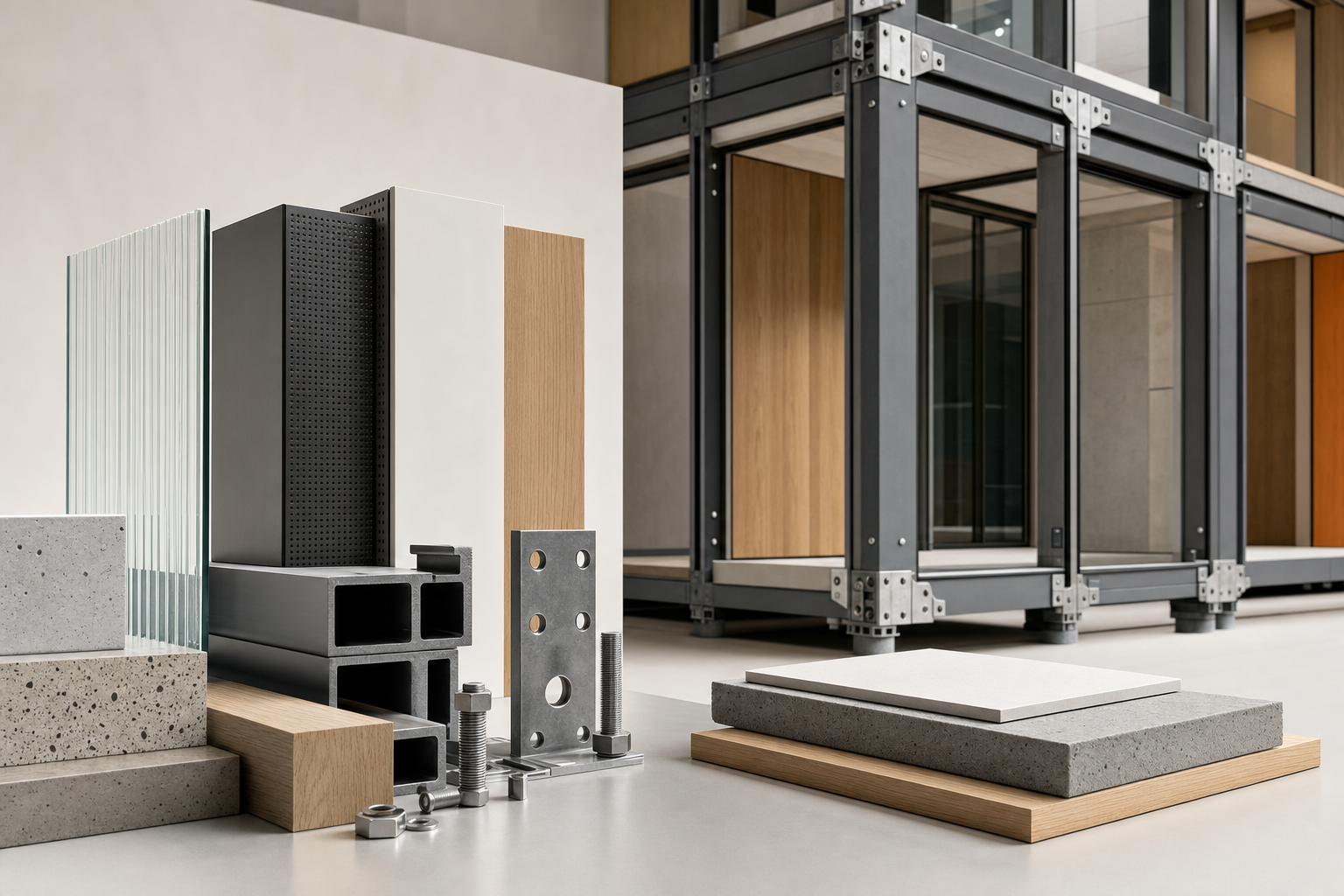
Reversible connections are fastening methods that allow building components to be detached without damage, facilitating reuse and recycling. Bolted connections are a prime example, favored over traditional adhesives or welds because they can be undone easily.
Using bolted systems instead of permanent fixings means that elements like panels, frames, and cladding can be removed intact. This reduces demolition waste and preserves material quality. The EPA’s guidance highlights mechanical fasteners such as bolts and screws as best practices for DfD.
One decision rule for designers is: if the connection will need to be disassembled in the future, specify bolted or screwed fixings; if not, conventional adhesives may be acceptable but limit reuse. Avoiding permanent sealants also helps maintain accessibility.
Examples include the Chartwell School case, which uses exposed bolted connections and nail-free paneling to enable easy disassembly and reuse.
Reusable Components
Reusable components are building parts designed for multiple life cycles, maintaining their function and value across projects. Their significance lies in reducing the demand for new materials and decreasing waste.
Design strategies to maximize reuse include standardizing component sizes, avoiding composite materials that are hard to separate, and selecting durable materials that withstand multiple installations. For instance, steel frames with bolted connections are highly reusable compared to glued wood panels.
Successful projects using reusable components often employ modular systems, which can be disassembled and reconfigured. Manufacturers supporting reusable components emphasize material selection and connection methods that facilitate easy removal.
Material Passports and Tracking
Material passports are digital or physical documents that record detailed information about a product, component, or material used in a building. They include data on composition, origin, and disassembly instructions, enabling efficient tracking for future reuse or recycling.
By maintaining material passports, stakeholders can quickly identify reusable materials during renovation or demolition, supporting circular construction practices. The BAMB materials passports report explains how these documents facilitate material recovery and reuse.
Technological solutions such as QR codes and digital databases help integrate material passports into building management systems, ensuring that vital information is accessible when needed.
Detailing Implications
Design for disassembly changes architectural detailing by requiring connections and assemblies that can be taken apart without damage. This impacts decisions on joint types, material layering, and service accessibility.
Challenges include balancing structural performance with disassembly ease, ensuring weatherproofing without permanent adhesives, and coordinating multiple trades to maintain disassembly-friendly details. Solutions often involve visible, accessible connections and modular assemblies.
Practical tips for designers include specifying reversible fixings, designing for component accessibility, and avoiding mixed materials that are difficult to separate. The City of Seattle’s DfD guide offers detailed principles and examples of adaptable buildings.
Compliance and Warranty Barriers
Regulatory and warranty challenges can hinder DfD adoption. Compliance issues arise when codes and standards do not explicitly accommodate reversible connections or non-traditional materials. Warranty concerns include manufacturers’ reluctance to guarantee products that may be disassembled and reused.
Strategies to overcome these barriers include engaging with regulatory bodies early, documenting design intent clearly, and selecting products with recognized certifications. The BAMB policy framework discusses opportunities for policy evolution to support circular building practices.
Compared to traditional construction, DfD requires more proactive stakeholder collaboration to address these hurdles effectively.
Design Checklist for Disassembly-Ready Projects
- Assess project goals to prioritize disassembly and reuse.
- Choose durable, non-composite materials suitable for multiple life cycles.
- Specify mechanical fasteners like bolts and screws instead of adhesives.
- Design modular components with standardized dimensions.
- Incorporate material passports to document components and materials.
- Plan for accessible connections and service routes.
- Engage with regulatory authorities to ensure compliance.
- Coordinate with manufacturers to secure warranties supporting reuse.
- Include adaptation or disassembly plans in project documentation.
- Train construction teams on DfD best practices.
This checklist draws from the EPA’s best practices and the Seattle DfD guide, providing practical steps for demountable construction.
CTA / Next Best Action
Designing for disassembly is a vital step toward sustainable, circular economy-driven construction. To deepen your expertise, explore additional resources such as detailed guides, industry courses, and expert consultations. Engaging with these materials will empower you to create adaptable buildings that serve as material banks, reducing environmental impact and fostering innovation.
Start by reviewing comprehensive resources like the ISO 20887:2020 standard and the BAMB materials passports report. Connect with sustainability experts to tailor solutions for your projects and join the movement toward circular construction.
People Also Asked: What is House Design for Disassembly?
House design for disassembly involves creating residential buildings that can be easily taken apart at the end of their use, allowing components and materials to be recovered and reused. This approach uses strategies such as modular construction, bolted connections, and accessible service routes to facilitate disassembly. Experts in residential design highlight that DfD not only reduces waste but also offers homeowners flexibility for future renovations or expansions.