Define Retrofit for Overheating
Retrofitting for overheating refers to the targeted modifications made to existing buildings to mitigate excessive indoor heat during warm periods. Unlike general retrofitting, which often focuses broadly on energy efficiency or structural improvements, this approach specifically addresses the challenge of overheating—a growing concern as climate change drives more frequent and intense heatwaves.
With global temperatures rising, adapting our built environment to maintain comfort without excessive energy use is crucial. For example, a retrofit project in London combined solar shading with night-time natural ventilation, resulting in a significant reduction in overheating risk for residential homes (source).
Diagnose Overheating Causes
Understanding why a building overheats is the first step in an effective retrofit. Common causes include excessive solar gains through windows, poor ventilation, internal heat from occupants and appliances, building orientation, and inadequate shading.
Assessment involves analyzing these factors systematically. For instance, the Chartered Institution of Building Services Engineers (CIBSE) provides a methodology to evaluate overheating risk by considering solar gains, occupancy patterns, and ventilation strategies (source).
As a decision rule: if solar gain is the dominant factor, prioritize shading solutions; if poor ventilation is key, focus on improving airflow. Avoid the pitfall of applying generic fixes without diagnosing the specific drivers, which can waste resources and fail to resolve overheating.
Solar Gain and Shading
Solar gain occurs when sunlight enters a building and is absorbed, increasing indoor temperatures. Managing solar gain is critical in retrofits to prevent overheating.
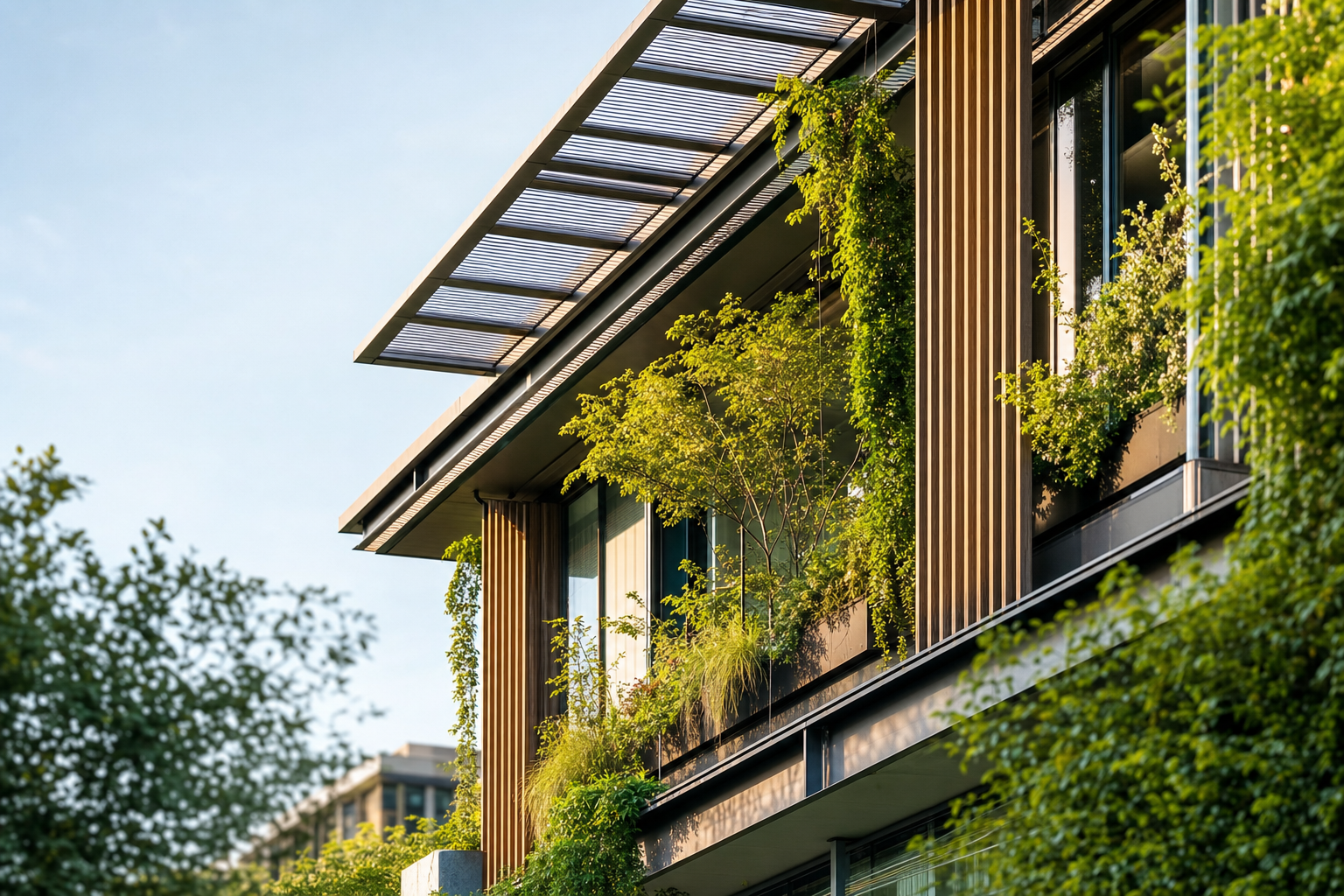
External shading is one of the most effective measures to block unwanted solar radiation before it enters the building. Options include fixed shading devices like awnings, adjustable shutters, and external blinds. For example, fixed horizontal louvers are highly effective on south-facing windows, while vertical fins work better on east or west elevations (source).
Comparing shading methods, external shading generally outperforms internal blinds because it prevents heat buildup on glazing surfaces. A successful retrofit in London demonstrated how combining solar shading with night ventilation reduced indoor temperatures during heatwaves (source).
Ventilation and Purge Cooling
Natural ventilation uses the movement of air through openings to remove heat, improving comfort without mechanical systems. Purge cooling is a form of ventilation that flushes out warm indoor air, usually at night, replacing it with cooler outside air.
Techniques include cross-ventilation by opening windows on opposite sides, stack ventilation using vertical shafts, and secure night ventilation to allow airflow while maintaining security. These methods can significantly reduce indoor temperatures if well designed.
For example, buildings retrofitted with secure night ventilation showed measurable drops in peak indoor temperatures during heatwaves (source).
A key benefit of purge cooling is its low energy use, making it a sustainable alternative to air conditioning when climate and building design allow.
Roof, Wall, and Glazing Upgrades
Upgrading building elements can greatly reduce heat gain and improve thermal comfort. Roof insulation limits heat transfer from the sun-exposed roof, while glazing upgrades reduce solar gain and improve thermal performance.
High-performance glazing, such as low-emissivity (low-e) glass or double/triple glazing with solar control coatings, can cut unwanted solar radiation while maintaining daylight. Wall materials with high thermal mass can absorb and slowly release heat, smoothing temperature swings.
For example, retrofits incorporating improved roof insulation and glazing upgrades have been shown to reduce overheating risk by limiting heat ingress (source).
Reflective Surfaces and Planting
Reflective surfaces on roofs and walls, often called cool roofs or cool walls, reflect more sunlight and absorb less heat, reducing the building’s thermal load.
Planting strategically around buildings offers natural cooling benefits. Trees and vegetation provide shade and cool the surrounding air through evapotranspiration, which can lower ambient temperatures by several degrees (source).
Urban planting strategies such as green walls, rooftop gardens, and shade trees not only reduce overheating but also improve air quality and enhance wellbeing.
When Air Conditioning is Justified
While passive cooling strategies should be the first approach, air conditioning may be necessary in some scenarios, such as in buildings with high internal heat gains, limited ventilation options, or in regions with extreme heat waves.
Criteria for considering air conditioning include failure of passive measures to maintain comfort, health risks for vulnerable occupants, and the building’s use type. However, it should be a last resort due to its energy consumption and environmental impact.
For instance, some commercial buildings with dense occupancy may require mechanical cooling despite other retrofit efforts.
Retrofit Priority Checklist
- Assess causes of overheating through detailed diagnosis.
- Implement external shading to limit solar gain.
- Enhance natural ventilation and enable secure night purge cooling.
- Upgrade roof insulation and install high-performance glazing.
- Apply reflective surfaces on roofs and walls.
- Incorporate strategic planting for shading and cooling.
- Evaluate the need for air conditioning only after passive measures.
Following a staged approach ensures resources focus on the most impactful measures first, as recommended in retrofit guidance for existing homes (source).
CTA / Next Best Action
To deepen your understanding of retrofitting for overheating, explore detailed guides from the Committee on Climate Change and CIBSE, which offer technical methodologies and case studies. Consulting with retrofit experts can help tailor solutions to your specific building challenges and climate context.
Start by reviewing the CCC’s report on overheating risk and the CIBSE overheating assessment methodology to inform your retrofit strategy.
People Also Asked: How to Approach Home Retrofit for Overheating?
A home retrofit for overheating should adopt a fabric-first approach, focusing on limiting solar gains and improving ventilation before considering mechanical cooling. Key strategies include installing external shading, enhancing roof and wall insulation, upgrading glazing, and enabling secure night-time ventilation.
In some cases, mechanical ventilation with heat recovery (MVHR) systems can provide controlled ventilation and cooling, especially where natural ventilation is insufficient. This layered approach prioritizes passive measures to reduce energy use and improve comfort sustainably (source).