Why Mass Timber Is Quietly Reshaping the Urban Skyline
What is Mass Timber Buildings
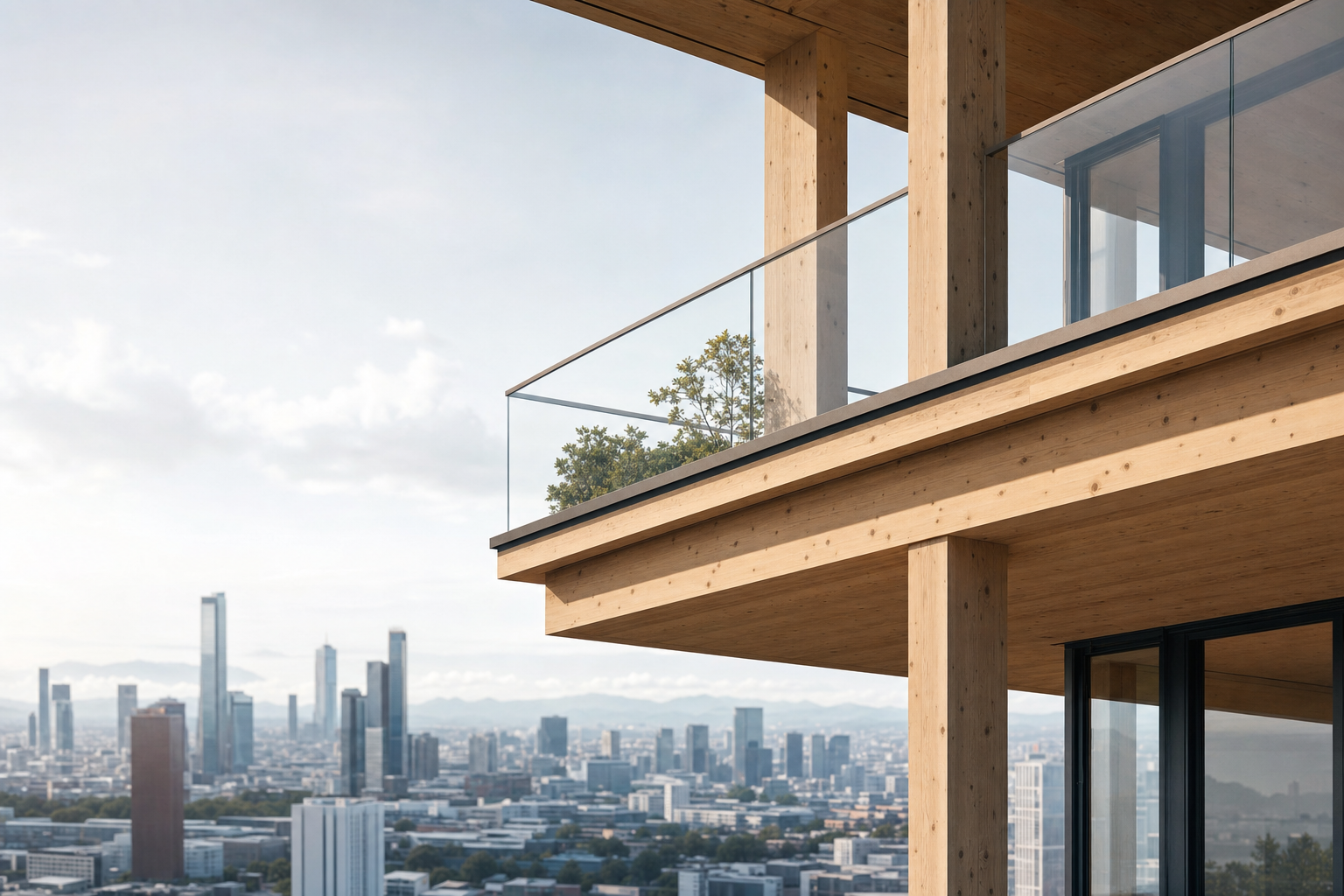
Mass timber buildings utilize engineered wood products that are manufactured by bonding layers of wood together to create strong, large structural elements. Typical components include cross-laminated timber (CLT), glulam (glued laminated timber), nail-laminated timber, and structural composite lumber. These materials have evolved from traditional timber framing but offer enhanced strength and versatility, making them increasingly popular in urban construction.
Historically, timber was a primary building material, but its use in tall buildings diminished with the rise of steel and concrete. Today, a resurgence driven by sustainability goals and advances in wood technology is bringing mass timber back to the forefront. Notable projects like the Brock Commons Tallwood House and Mjøstårnet demonstrate the potential of mass timber to create tall, efficient, and aesthetically pleasing urban structures. The American Wood Council highlights the growing industry momentum behind these innovative building types, emphasizing their role in modern construction.
Mass Timber Product Types
Cross-laminated timber (CLT) consists of several layers of lumber boards stacked crosswise and glued together, resulting in large, flat panels that provide excellent strength and dimensional stability. Glulam, by contrast, is composed of multiple layers of lumber glued along their length, often used for beams and columns. Both materials offer exceptional load-bearing capabilities and are adaptable for walls, floors, and roofs.
For example, CLT panels were prominently used in the Ascent building in Milwaukee, enabling rapid construction with prefabricated components. Experts note that the combination of CLT and glulam allows architects and engineers to achieve both structural integrity and design flexibility, supporting the rise of mass timber in complex urban projects.
Fire Performance and Charring
One common concern about mass timber buildings is fire safety. However, mass timber exhibits a unique protective behavior through the charring process. When exposed to fire, the outer layer of timber chars and forms an insulating barrier that slows further combustion and protects the inner core. This natural char layer maintains the structural integrity of mass timber elements longer than many expect.
Compared to steel, which can lose strength rapidly at high temperatures, mass timber’s predictable charring enhances fire resistance. The WoodWorks resource on fire requirements explains how building codes evaluate mass timber’s fire performance, often allowing for reduced fireproofing requirements thanks to this inherent protection.
Structural Logic and Span Limits
Timber engineering has advanced to support impressive structural spans and heights. Mass timber elements like glulam beams can span long distances with less material weight than concrete or steel alternatives. This is particularly advantageous in urban settings where space and load capacity are critical.
For example, tall timber buildings such as Mjøstårnet in Norway demonstrate how engineered wood supports high-rise construction with spans that accommodate open floor plans. A practical decision rule is: if a project requires long spans with reduced weight, consider glulam beams combined with CLT panels; if spans are shorter or budget is tighter, traditional framing may suffice.
Carbon and Weight Benefits
Mass timber buildings offer significant environmental advantages, chiefly through reduced embodied carbon. The U.S. Forest Service research estimates that replacing steel and concrete with mass timber in mid- and high-rise buildings can avoid substantial embodied emissions while storing biogenic carbon within the wood products. This makes mass timber a compelling choice for developers pursuing sustainability goals.
Additionally, the lighter weight of mass timber components reduces foundation requirements and simplifies logistics in urban construction. This can translate into cost savings and faster project timelines. Sustainability experts frequently highlight these carbon and weight benefits as key drivers behind the growing adoption of mass timber.
Acoustic and Moisture Challenges
Despite its advantages, mass timber presents challenges in acoustic insulation and moisture management. Room-to-room noise control can be more complex due to the material’s stiffness and connection details. The WoodWorks acoustics guide outlines design strategies such as resilient channels and insulation to mitigate airborne and impact noise.
Moisture is another critical concern during construction. Early moisture planning is essential to prevent swelling, microbial growth, and decay. The mass timber moisture management resource recommends protective coverings and proper sequencing to avoid trapped moisture. A common pitfall is neglecting moisture control early on, which can compromise durability; avoiding this requires coordinated planning among contractors and designers.
Tall Timber Case Studies
Several tall timber projects showcase the potential of mass timber to redefine urban skylines. The CTBUH timber building database features examples like Ascent in Milwaukee, Mjøstårnet in Norway, and Brock Commons Tallwood House in Vancouver. These buildings demonstrate engineering ingenuity, combining mass timber with hybrid systems to reach new heights while maintaining safety and sustainability.
For instance, Brock Commons integrates CLT floors with a concrete core, balancing the benefits of mass timber with proven structural systems. Interviews with project engineers reveal how collaboration and innovative design were critical to overcoming challenges related to span, fire, and acoustics.
Suitability Checklist for Mass Timber
When evaluating whether mass timber is suitable for a project, consider the following checklist:
- Location: Is the site accessible for prefabricated timber deliveries and is the local climate favorable for wood construction?
- Budget: Does the project budget allow for potential cost premiums associated with mass timber fabrication and installation?
- Design Goals: Are sustainability, aesthetics, and construction speed priorities?
- Structural Requirements: Do span and load demands align with mass timber capabilities?
- Fire and Acoustic Needs: Can the design accommodate necessary fire ratings and noise control measures?
Projects that align positively with these factors are strong candidates for mass timber construction, while those with tight budgets or complex acoustic demands might require hybrid or alternative approaches.
Are Mass Timber Buildings Safe?
Safety is paramount in construction, and mass timber buildings have demonstrated robust performance backed by research and code compliance. Studies confirm that properly designed mass timber elements meet or exceed fire safety standards due to charring and structural behavior. Experts emphasize that adherence to design codes and fire testing protocols ensures occupant safety comparable to conventional materials.
The WoodWorks fire requirements resource provides detailed guidance on achieving compliant fire ratings. Overall, mass timber buildings are safe when engineered and constructed with attention to established standards.
In summary, mass timber is reshaping urban skylines by offering a sustainable, safe, and architecturally exciting alternative to traditional materials. For interior designers, architects, and developers eager to explore this innovative field, diving deeper into mass timber projects and expert resources can open new possibilities.
Explore further by reviewing detailed case studies and technical guides available through industry organizations and consider consulting with mass timber specialists to evaluate your next project’s potential.