
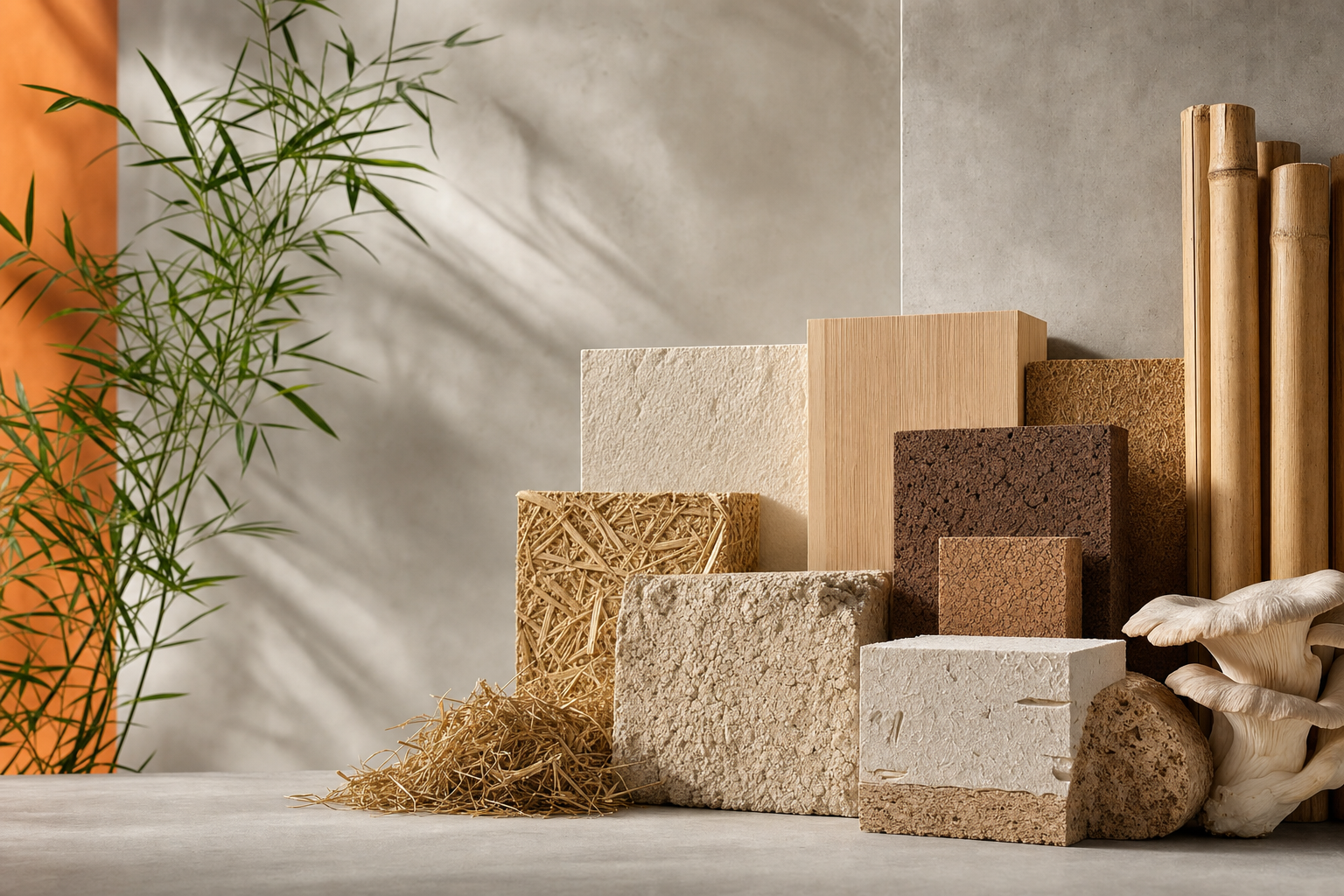
Define Bio-Based Building Materials
Bio-based building materials are derived from renewable biological resources such as plants and agricultural byproducts. These materials serve as sustainable alternatives to traditional construction resources, offering significant environmental benefits. Unlike conventional materials that often rely on fossil fuels or intensive mining, bio-based options can act as carbon sinks, storing biogenic carbon captured during the growth of the source plants. This property helps reduce the overall embodied carbon footprint of buildings, which is crucial given that buildings and construction remain a major source of global CO2 emissions and material extraction, as highlighted by the UNEP Global Status Report.
People also ask: What are bio-based building materials? Simply put, these are construction materials sourced from living or recently living organisms, designed to lower environmental impact while maintaining performance.
Main Material Families
Several key bio-based building materials have emerged as promising options for sustainable construction. These include:
- Hempcrete: A mixture of hemp hurds and lime, used primarily as a nonstructural wall infill. It offers excellent insulation and breathability but requires adherence to specific construction codes, such as those outlined in the IRC 2024 Appendix BL.
- Cork Insulation: Harvested from cork oak bark, this material provides natural thermal and acoustic insulation, is lightweight, and renewable.
- Wood Fibre: Derived from wood processing byproducts, wood fibre insulation is biodegradable and has good moisture regulation properties.
- Straw Panels: Compressed straw bales or panels serve as insulation with notable thermal and acoustic benefits.
- Mycelium: The root structure of fungi, mycelium can be grown into custom shapes and offers biodegradability and fire resistance.
- Bamboo: A fast-growing grass with a high strength-to-weight ratio, bamboo is used structurally and decoratively.
- Lime-Based Systems: Often combined with bio-aggregates like hemp, lime-based mortars and plasters provide durability and moisture management.
Each of these materials brings unique properties that can be leveraged depending on project goals and constraints.
Thermal, Acoustic, and Moisture Properties
Bio-based building materials generally excel in thermal insulation, acoustic dampening, and moisture regulation compared to traditional materials. For example, hempcrete and straw panels offer low thermal conductivity, helping maintain stable indoor temperatures and reducing energy consumption. Cork and wood fibre also provide effective sound absorption, enhancing occupant comfort.
Moreover, bio-based materials often have superior moisture management capabilities. Their hygroscopic nature allows them to absorb and release moisture, reducing risks of condensation and mold growth. Laboratory assessments, such as those reported by the Oak Ridge National Laboratory, show that these materials balance density, thermal conductivity, and moisture transmission effectively.
Compared to conventional insulation like fiberglass or foam, bio-based options can offer a more breathable and healthier building envelope. However, selecting the right material depends on climate and building design.
Structural Limitations
While bio-based materials have many advantages, they do present structural challenges. Most, including hempcrete and mycelium, have limited load-bearing capacity and are best used as infill or insulation rather than primary structural elements. Bamboo is a notable exception, with high tensile strength suitable for structural framing in some contexts.
Compatibility with existing building systems can also be a hurdle. For instance, integrating bio-based insulation with conventional framing and finishes may require adjustments to accommodate differences in moisture behavior or mechanical properties.
A practical decision rule is: if your project requires load-bearing walls, consider bamboo or engineered wood products; if the goal is insulation or infill, hempcrete or straw panels may be appropriate. Avoid using bio-based materials structurally without compliance to building codes and expert consultation to prevent failures.
Fire, Moisture, and Certification Issues
Safety is paramount when adopting new materials. Bio-based materials can vary in fire resistance; for example, hemp-lime composites have specific fire performance standards documented in the IRC 2024 Appendix BL. Proper treatment and design are essential to meet fire safety regulations.
Moisture-related concerns include susceptibility to rot or mold if materials remain wet for extended periods. Lime-based systems and breathable bio-aggregates help mitigate these risks by allowing vapor permeability and drying.
Certification is another critical aspect. Many bio-based products require third-party verification to ensure they meet building codes and environmental standards. Working with certified suppliers and consulting local regulations can streamline approval and ensure safety compliance.
Cost and Supply Chain Realities
Cost remains a significant consideration. Bio-based materials can sometimes be more expensive upfront due to limited production scale and specialized processing. Supply chain challenges such as logistics, market development, and regional availability also impact pricing and lead times.
The Kühne Foundation report details how scaling bio-based construction materials requires overcoming logistical hurdles and expanding market demand.
That said, the long-term benefits in energy savings and environmental impact can offset initial costs. Developers should evaluate total lifecycle costs and consider sourcing materials locally when possible to reduce supply chain complexity.
Suitable Use Cases
Bio-based materials shine in projects prioritizing sustainability, indoor air quality, and energy efficiency. They are particularly well-suited for:
- Residential buildings aiming for low embodied carbon.
- Renovations where breathability and moisture control are critical.
- Climate-responsive designs in temperate or humid regions.
- Nonstructural elements such as insulation, wall infill, and finishes.
For example, straw panel insulation works well in rural or low-tech settings, while bamboo is ideal for lightweight structures in seismic zones. Selecting the best material depends on project goals, climate, and regulatory environment.
Comparison Table of Bio-Based Options
Below is a summary comparison of key bio-based materials to aid decision-making. Note that exact values may vary based on product and sourcing.
- Hempcrete: Cost moderate; insulation R-value moderate; non-load-bearing; excellent moisture regulation.
- Cork: Cost higher; insulation R-value good; lightweight; fire resistant; renewable harvesting.
- Wood Fibre: Cost moderate; insulation R-value good; biodegradable; good acoustic properties.
- Straw Panels: Cost low; insulation R-value high; nonstructural; moisture sensitive if not protected.
- Mycelium: Cost emerging; insulation moderate; biodegradable; fire resistant with treatment.
- Bamboo: Cost variable; structural strength high; renewable; requires treatment for durability.
- Lime-Based Systems: Cost moderate; durability high; moisture regulating; often combined with other bio-aggregates.
Explore Bio-Based Materials in Your Next Project
Integrating bio-based building materials into your projects starts with research and collaboration. Begin by consulting detailed guides and engaging with suppliers who specialize in these materials. Consider pilot projects or small-scale applications to evaluate performance firsthand.
For deeper insights and technical data, explore resources like the Carbon Leadership Forum report on carbon-storing materials, which offers valuable information on embodied carbon benefits.
By thoughtfully incorporating bio-based materials, architects, interior designers, and developers can contribute to a more sustainable built environment while delivering unique aesthetic and performance benefits.
Start exploring bio-based materials today and position your next project at the forefront of sustainable construction innovation.