Define Low-Tech Sustainable Architecture
Low-tech sustainable architecture focuses on designing buildings that naturally regulate temperature and reduce energy consumption without relying on advanced electronic systems. This approach leverages natural materials such as earth, stone, and untreated timber, integrating passive climate control methods to create comfortable indoor environments. Unlike high-tech solutions that depend on gadgets and automation, low-tech designs prioritize simplicity and durability, often using vernacular materials like adobe, rammed earth, and bamboo to enhance sustainability (MDPI).
By embracing these natural resources and passive design principles, architects and developers can reduce the environmental impact of buildings while maintaining occupant comfort. This method aligns with the fundamentals of passive design, which includes smart orientation, thermal mass utilization, and natural ventilation to minimize heating and cooling demands (YourHome.gov.au).
Orientation and Solar Control
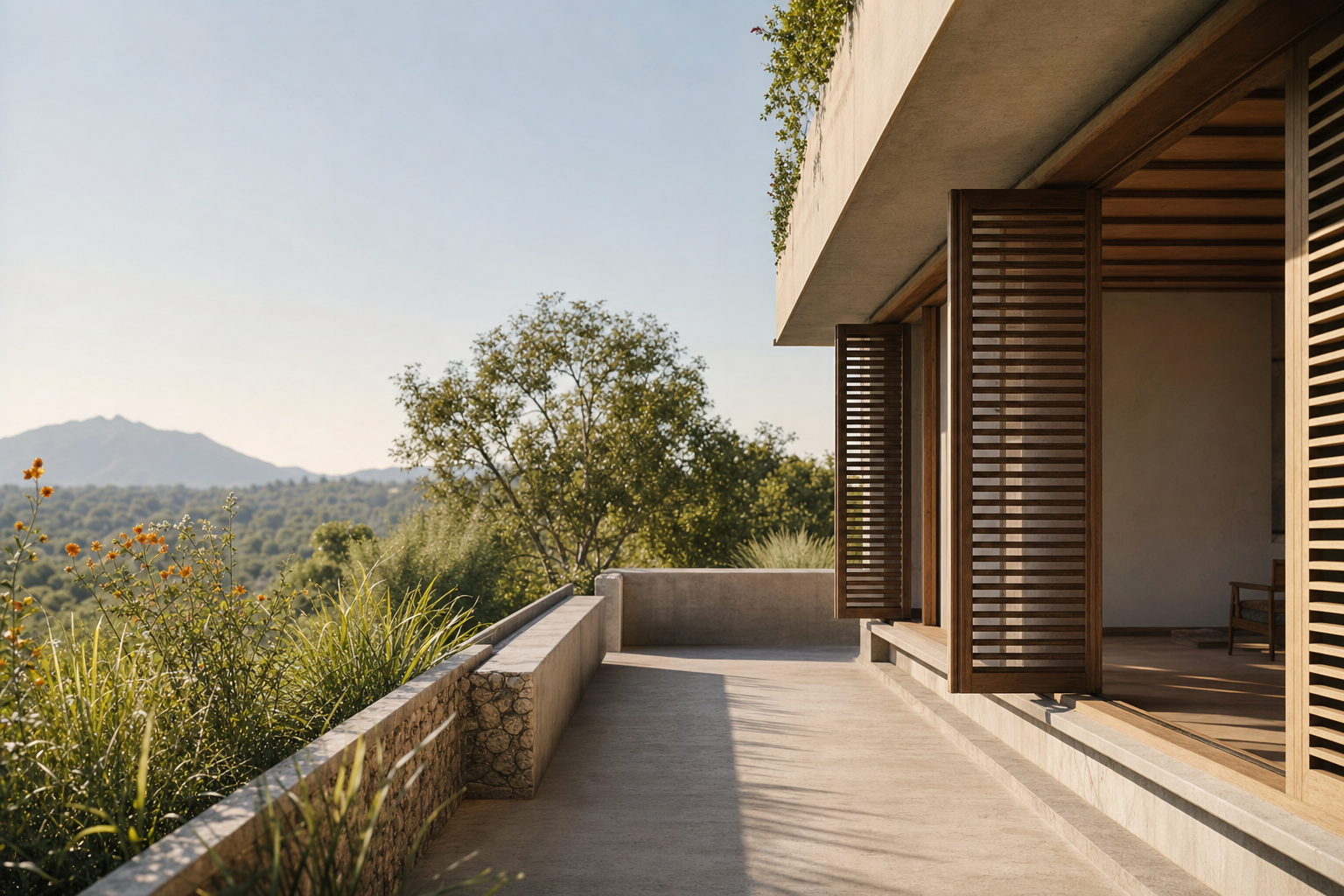
Building orientation plays a pivotal role in low-tech sustainable architecture. Positioning a building to maximize southern exposure (in the southern hemisphere) or southern exposure (in the northern hemisphere) allows for optimal solar gain during winter while minimizing overheating in summer. Incorporating shading devices such as awnings, trellises, and shutters further controls solar heat, preventing excessive heat buildup during warmer months (Energy.gov).
For example, a residential project oriented with its longest façade facing the sun can reduce heating needs significantly. If shading is inadequate, interiors may overheat, leading to discomfort and increased reliance on air conditioning—a common pitfall that can be avoided by careful design. Using deep reveals or adjustable shutters allows occupants to modulate sunlight penetration throughout the day and seasons, enhancing comfort without energy use.
Stack and Cross Ventilation
Natural ventilation strategies such as stack and cross ventilation harness airflow to cool buildings efficiently. Stack ventilation works by exploiting temperature differences: warm air rises and escapes through high openings, drawing cooler air from lower vents. Cross ventilation involves placing openings on opposite sides of a space to enable breeze flow through the building.
Historical buildings often employed stack ventilation using chimneys and clerestory windows, while modern sustainable designs integrate these principles with openable windows and vents to maximize airflow (YourHome.gov.au). A rule of thumb is: if a building site has prevailing winds, orient and design openings to capture these breezes for cross ventilation; if not, prioritize stack ventilation through vertical openings.
A common mistake is sealing buildings too tightly without providing adequate ventilation paths, which can trap heat and moisture. Implementing well-placed vents and operable windows avoids this issue and reduces cooling loads.
Thermal Mass and Night Cooling
Thermal mass refers to materials within a building that absorb, store, and release heat, helping to stabilize indoor temperatures. Materials like concrete slabs, masonry walls, or rammed earth can absorb heat during the day and release it at night, reducing temperature swings.
Complementing thermal mass with night cooling—opening windows or vents at night to flush out stored heat—enhances comfort and cuts down on mechanical cooling needs (YourHome.gov.au). For example, exposing a concrete slab floor inside a well-shaded room can maintain cooler daytime temperatures, while night ventilation removes residual warmth.
When retrofitting, exposing existing slabs or adding masonry walls can increase thermal mass without major reconstruction. However, designers must balance glazing and shading carefully; too much sun on thermal mass can cause overheating, while too little reduces its effectiveness.
Shutters, Reveals, and Planting
Additional passive design elements such as shutters, deep reveals, and strategic planting contribute significantly to sustainability. Shutters provide flexible shading and security, traditionally used in various climates to control light and airflow (Energy.gov). Deep reveals—recessed window frames—reduce direct sunlight penetration and glare, enhancing thermal comfort.
Planting trees and vines strategically around a building offers natural shade, cooling through evapotranspiration, and wind protection. Deciduous trees on the sun-facing side provide summer shade and allow winter sun penetration, while ground cover and pavement cooling reduce heat reflection (Energy.gov).
Low-Tech Retrofit Moves
Retrofitting existing buildings with low-tech sustainable strategies can be challenging but rewarding. Key approaches include adding shading devices like awnings, increasing natural ventilation through additional openings, and enhancing thermal mass by exposing floors or adding masonry elements.
Successful retrofit projects often involve assessing the building’s orientation and existing materials, then applying targeted improvements without extensive structural changes. Challenges include balancing daylight with shading and ensuring ventilation paths remain unobstructed. Overcoming these requires careful site-specific analysis and sometimes creative solutions like movable shutters or landscaping adjustments.
When Smart Systems Still Help
While low-tech sustainable architecture emphasizes simplicity, integrating selective smart systems can enhance performance without compromising principles. For instance, automated shading devices or ventilation controls can optimize comfort and energy use when manual operation is impractical.
Hybrid systems that combine passive design with smart controls have shown benefits in improving indoor environment quality and reducing energy consumption, especially in complex or large-scale buildings. The key is to use technology as a complement rather than a substitute for fundamental low-tech strategies.
Checklist of Passive Design Moves
-
Optimize Orientation: Position building to maximize beneficial solar gain and natural breezes.
-
Incorporate Shading: Use awnings, shutters, deep reveals, or vegetation to control sunlight.
-
Enable Ventilation: Design for stack and cross ventilation with operable openings.
-
Use Thermal Mass: Integrate materials that absorb and release heat to stabilize temperatures.
-
Plan Night Cooling: Facilitate nighttime ventilation to remove stored heat.
-
Add Strategic Planting: Use trees and vines to provide shade and improve microclimate.
-
Consider Retrofit Options: Assess and enhance existing buildings with shading, ventilation, and thermal mass improvements.
What are the Basics of Low-Tech Sustainable Architecture?
At its core, low-tech sustainable architecture uses natural materials and passive design strategies to reduce the need for mechanical heating and cooling. This includes orienting buildings to capture or block the sun as needed, employing thermal mass to regulate temperature swings, and enhancing natural ventilation through stack and cross ventilation principles. Materials like earth, stone, and untreated timber support durability and low embodied energy. These basics help create comfortable, energy-efficient buildings without relying on complex technologies (YourHome.gov.au).
For example, a home built with rammed earth walls oriented to the sun, shaded by deciduous trees, and designed with operable windows for cross ventilation embodies these basics effectively.
Exploring these foundational concepts can empower architects and developers to design buildings that are both sustainable and resilient.
To deepen your understanding and practical skills in low-tech sustainable architecture, consider exploring further educational resources and expert guides. Engaging with these materials will enhance your ability to implement effective passive design strategies and contribute meaningfully to sustainable development.