What is 3D Printed Houses
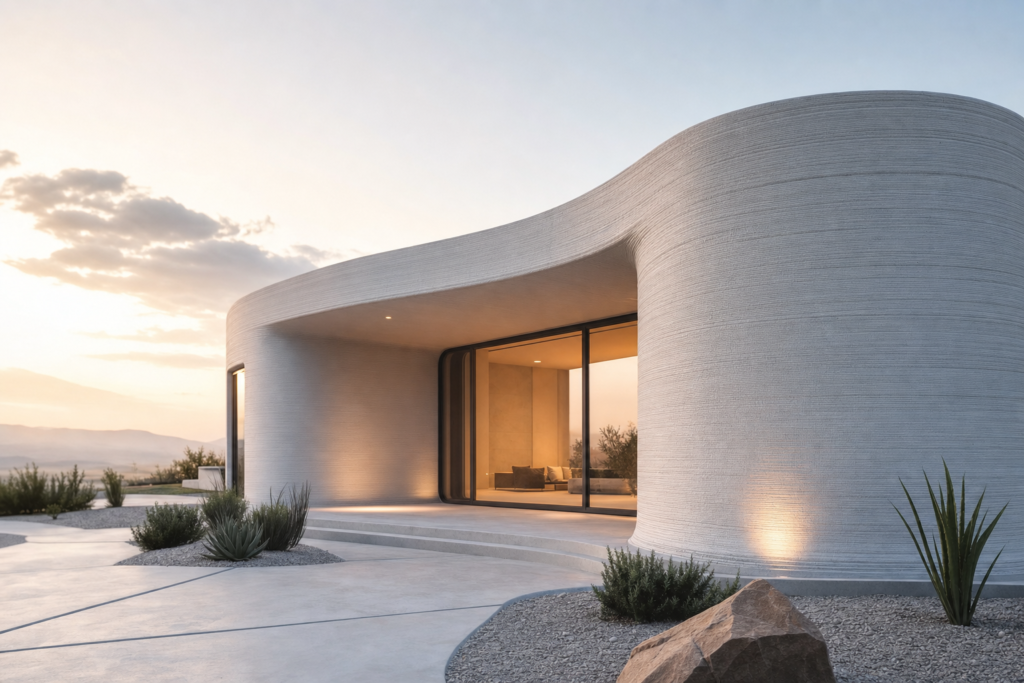
3D printed houses represent a cutting-edge approach to residential construction where building components are fabricated layer by layer using computer-controlled extrusion of cement-based materials. Unlike traditional construction, which relies heavily on manual labor and sequential assembly of materials, 3D printing automates the process through additive manufacturing, depositing concrete or other composites precisely to form walls and structural elements. This method reduces waste and allows for complex geometries that are difficult to achieve with conventional techniques. For a detailed roadmap on this process and its research gaps, the NIST report provides an authoritative overview.
What Has Actually Been Built?
The global footprint of completed 3D printed housing projects is growing steadily, showcasing both innovation and practical challenges. Notable among these is the Project Milestone in Eindhoven, which marked a milestone by delivering the first residents keys to 3D concrete-printed homes. This project emphasized design freedom and collaborative partnerships, setting a precedent in Europe.
In the United States, Habitat for Humanity Peninsula and Greater Williamsburg successfully completed a 3D printed home, demonstrating cost savings of up to 15% per square foot compared to traditional builds. While these projects highlight the promise of 3D printed houses, challenges such as regulatory approvals, material consistency, and finishing quality remain. The Habitat for Humanity case study provides insights into the economic and practical realities of these prototypes.
Printing Process and Materials
The core of construction 3D printing lies in the additive manufacturing process, where layers of printed concrete or specialized composites are deposited to build structural elements. Materials have evolved beyond standard cement mixes; for example, UKRI-funded research at the University of Manchester has developed Concretene, a graphene-enhanced concrete that offers improved resilience and sustainability.
This innovation addresses environmental concerns by potentially reducing the carbon footprint of concrete production and improving durability. However, selecting the right material mix requires balancing printability, curing time, and structural performance. A common pitfall is underestimating the curing environment’s impact on material strength; careful monitoring and controlled conditions are essential to avoid compromised integrity.
Structural and Regulatory Questions
Structural certification remains a critical hurdle for 3D printed houses. The acceptance criteria for 3D concrete printing have been formalized through standards such as the ICC-ES AC509, which provides evaluation reports for automated concrete wall construction technologies. Compliance with these standards ensures safety and builds trust among stakeholders.
Regulatory challenges often stem from the novelty of the technology and the lack of widespread precedents. Developers must navigate building codes that were not originally designed with automated construction in mind. A key decision rule is: if your project uses novel materials or processes, engage early with local building authorities to align on certification requirements; if not, expect delays or costly redesigns.
Ongoing research continues to address these issues, aiming to streamline approvals and establish robust testing protocols for 3D printed structural elements.
Labour and Cost Economics
One of the most compelling arguments for 3D printed houses is the potential for labor cost savings. Automated construction significantly reduces the need for manual labor, which can lower overall project costs. For example, the Habitat for Humanity project estimates up to 15% savings per square foot, primarily through reduced labor and material waste.
However, these savings are balanced against upfront investments in printing equipment and technology development. Scalability remains a question: if demand is high and projects are well-planned, costs can decrease further; if projects are small or fragmented, cost benefits may not materialize fully.
Comparing traditional economics with 3D printing, developers should consider that while initial capital expenses might be higher, long-term operational efficiencies and reduced construction times can yield better returns. An economic pitfall to avoid is assuming immediate cost parity without factoring in project scale and technology maturity.
Finish Quality and Services Integration
Finish quality in 3D printed houses varies depending on printer resolution, material properties, and post-processing techniques. While the printed concrete walls provide structural robustness, their surface texture often requires additional finishing to meet aesthetic standards comparable to traditional homes.
Integrating plumbing, electrical, and HVAC services poses unique challenges. Unlike conventional construction where conduits and pipes are installed during framing, 3D printing requires pre-planning and embedding channels or sleeves within the printed layers. Innovations in design software and modular service components are improving this integration, but careful coordination is essential to avoid costly rework.
A common mistake is neglecting early collaboration between architects, engineers, and service contractors, which can lead to clashes and delays. Case studies from recent projects show that when services integration is planned from the outset, the resulting homes meet or exceed conventional standards.
Strongest Use Cases
3D printed houses excel in scenarios requiring rapid deployment, cost efficiency, and design flexibility. Disaster relief housing is a prime example where speed and resilience are paramount. The technology enables quick construction of durable shelters that can be customized to local needs.
Affordable housing initiatives also benefit, as the reduced labor costs and material efficiencies help lower overall expenses. The Habitat for Humanity project exemplifies this application, providing a replicable model for other communities.
Architects and developers should consider 3D printing when projects demand unique forms or when conventional supply chains are constrained. Expert opinions affirm that the strongest use cases align with environments where traditional construction bottlenecks exist and innovation can add clear value.
Hype vs Reality Scorecard
Media headlines often tout 3D printed houses as a revolutionary solution to global housing shortages, promising low cost and instant construction. While the technology is indeed transformative, the reality is more nuanced.
The hype score might be high, but practical specifications reveal limitations such as finishing requirements, regulatory hurdles, and current scale constraints. For instance, while some projects have achieved cost savings and rapid builds, widespread adoption is still in its infancy.
Experts recommend a balanced view: 3D printed houses are a promising technology with demonstrated successes, but they are not yet a universal replacement for traditional methods. Decision-makers should weigh hype against verified project outcomes and ongoing research.
People Also Asked: What are the Advantages of 3D Printed Houses?
3D printed houses offer several advantages, including accelerated construction timelines, cost reductions primarily through labor savings, and enhanced resilience from innovative materials like graphene-enhanced concrete. These homes can be customized with complex designs, reducing material waste and environmental impact. Studies indicate that construction speed can be significantly faster compared to traditional methods, while preliminary cost analyses show meaningful savings under the right conditions.
For interior designers, architects, and developers curious about this emerging field, exploring projects like Project Milestone or the Habitat for Humanity initiative provides valuable insights into the current capabilities and future potential of 3D printed houses. Engaging with industry experts and attending relevant conferences can further deepen understanding and foster innovation in your projects.
