
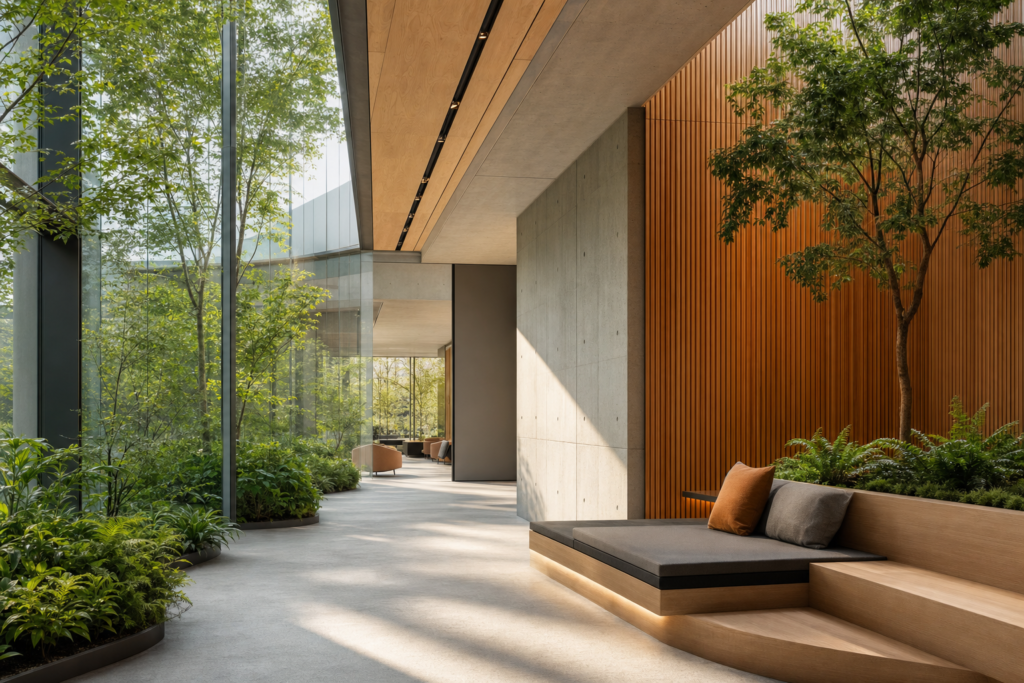
What is Biophilic Design
Biophilic design is an approach that integrates nature into built environments to foster a connection between people and the natural world. According to Kellert and Calabrese, it encompasses three major experience categories: direct nature (such as plants and water), indirect nature (natural materials and patterns), and the spatial experience of place (including refuge and prospect). This design philosophy is more than just adding greenery; it involves thoughtfully incorporating natural elements to enhance architecture and interior spaces.
Examples of biophilic elements include indoor gardens, natural wood finishes, water features, and architectural forms that mimic natural shapes. These elements work together to create environments that support human wellbeing and satisfaction.
What Biophilia Means in Architecture
In architectural practice, biophilia influences design by prioritizing nature connection through spatial planning and material selection. Architects integrate natural elements such as daylight, views of nature, natural ventilation, and organic materials to create environments that feel alive and restorative.
For instance, the Bullitt Center exemplifies biophilic architecture by incorporating abundant daylight, fresh air systems, natural materials, and expansive views, demonstrating a holistic approach far beyond mere houseplants. This contrasts with traditional design approaches that often prioritize function and aesthetics without emphasizing human-nature interaction.
Evidence for Wellbeing Outcomes
Peer-reviewed research supports the psychological and physiological benefits of biophilic design. A comprehensive review highlights improved mood, reduced stress, enhanced cognitive function, and faster recovery from illness when occupants experience natural elements in their environment. However, evidence varies in strength depending on the specific biophilic feature, underscoring the importance of an evidence-based approach rather than relying on hype.
Expert opinions caution that while biophilic design enhances wellbeing, not all elements have equal impact. For example, a PubMed-indexed review advises skepticism toward claims that ordinary houseplants significantly purify indoor air, emphasizing the need for realistic expectations.
Design Strategies Beyond Plants
Effective biophilic design extends well beyond adding plants. Strategies include maximizing daylight penetration, using natural materials like wood and stone, incorporating water features, and creating spatial experiences that evoke prospect and refuge. These elements contribute to a comprehensive design approach that supports human health and comfort.
For example, a project might use daylighting design to reduce artificial lighting needs while connecting occupants to the natural rhythm of the day. Natural materials provide tactile and visual interest that resonates with our innate affinity for nature, enhancing sensory engagement.
Daylight, Views, and Natural Materials
Daylight plays a crucial role in biophilic design by regulating circadian rhythms and improving mood. Views to natural landscapes offer psychological restoration and reduce mental fatigue. Natural materials such as wood, stone, and natural textiles create sensory richness and warmth.
Projects emphasizing these elements often feature large windows oriented to capture views, skylights for balanced daylight, and interiors that showcase natural textures. Research indicates these elements contribute significantly to occupant wellbeing and satisfaction.
Weak Marketing Claims to Avoid
Beware of marketing claims that oversimplify or exaggerate biophilic benefits. Common pitfalls include promoting mere presence of potted plants as a cure-all for indoor air quality or wellbeing without supporting evidence. Such claims can mislead clients and dilute the credibility of biophilic design.
To discern valid claims, rely on evidence-based design principles and peer-reviewed research. If a claim lacks scientific backing, approach it with caution and seek expert consultation.
Defensible Framework for Briefs
When integrating biophilic design into project briefs, follow a structured framework:
- What is clear biophilic goals aligned with occupant wellbeing.
- Identify relevant biophilic elements based on site context and user needs.
- Incorporate measurable criteria, such as those from the WELL Building Standard’s Biophilia II feature, to guide design decisions.
- Ensure collaboration among architects, interior designers, and engineers for holistic integration.
- Plan for post-occupancy evaluation to assess biophilic outcomes.
This approach ensures a defensible, evidence-based integration of biophilia rather than superficial application.
Evaluation Checklist
Use an evaluation checklist to assess biophilic design elements effectively. Key criteria include:
- Presence and quality of direct nature elements (plants, water).
- Use of indirect nature (natural materials, patterns).
- Access to daylight and views to nature.
- Spatial features supporting prospect and refuge.
- Measurable occupant access and interaction with biophilic features.
The WELL Building Standard provides quantitative metrics that can be adapted into such checklists to ensure consistency and accountability.
By applying this checklist, designers can avoid common pitfalls such as over-reliance on plants alone and instead create holistic environments that truly embody biophilic principles.
Biophilic design is far more than just houseplants; it’s a comprehensive architectural approach that thoughtfully integrates nature to enhance human wellbeing. For junior architects eager to master this field, grounding your practice in evidence-based strategies and frameworks is essential.
For further learning, explore detailed resources like the 14 Patterns report and the WELL Building Standard’s Biophilia II feature. Engaging with professional communities and forums can also deepen your understanding and application of biophilic design principles.
