
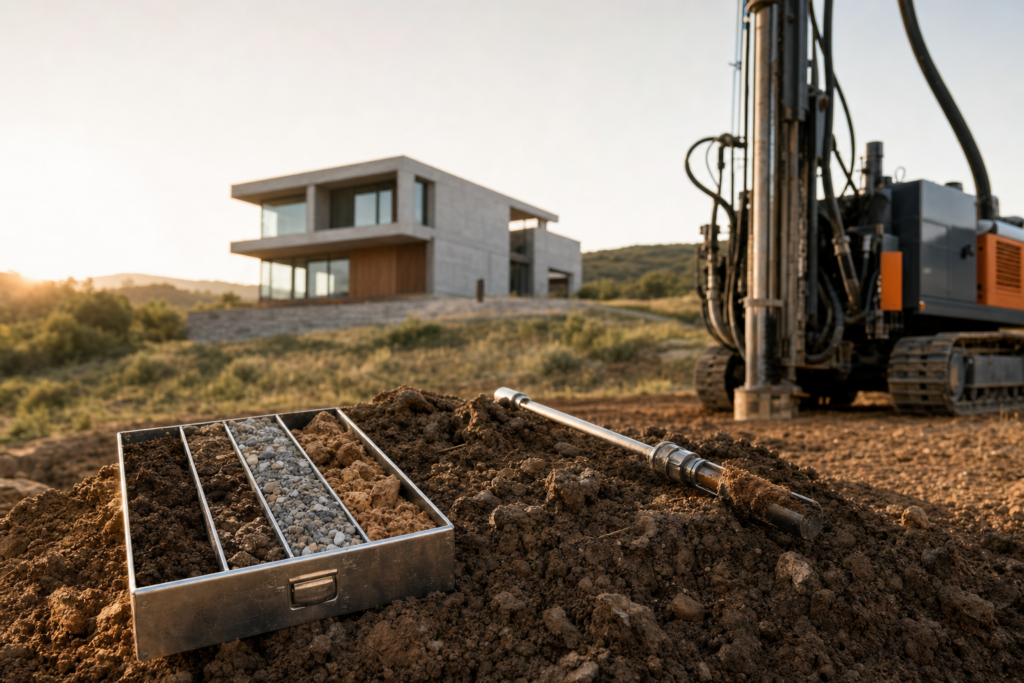
What is Soil Testing for Self-Build
Soil testing for self build is a critical process that involves assessing the ground conditions before starting any construction project. It examines the soil’s physical and chemical properties to understand its suitability for supporting structures. Many self-builders overlook this step, assuming the ground is stable or that basic inspections suffice. However, skipping soil testing can lead to costly foundation failures, delays, or even project abandonment.
For example, a self-builder in the UK successfully completed their home by first commissioning a thorough soil test, which revealed the presence of shrinkable clay. This insight allowed them to design appropriate foundations and drainage, preventing future structural issues.
Understanding soil testing for self build is essential to avoid common misconceptions such as soil being uniformly stable or that visual inspection alone can guarantee safety. Proper testing ensures informed decisions, protecting your investment and safety.
Desk Study vs Trial Pit vs Geotechnical Report
Ground investigation comes in several forms, each suited to different project needs and budgets. A desk study is the initial phase, involving a review of existing data, maps, and historical land use to identify potential risks like contamination or filled ground. This is low cost and non-intrusive but may miss site-specific details.
A trial pit is a shallow excavation to visually inspect soil layers and groundwater presence. It provides direct information about strata and foundation-relevant conditions at moderate cost. Trial pits are suitable when preliminary studies suggest minor uncertainties.
A geotechnical report is the most comprehensive investigation, incorporating borehole sampling, penetration tests, soil profiling, water table measurement, and foundation recommendations. Though more expensive, it is essential for complex sites or where soil variability is high.
Decision rule: If your site has no known contamination and uniform soil from desk study, a trial pit might suffice. If contamination, variable soil, or complex structures are planned, a geotechnical report is necessary.
What Soil Tests Reveal
Soil testing uncovers vital information such as soil type (clay, sand, silt), contamination levels, drainage capacity, and groundwater depth. For instance, contamination can pose health risks and limit development, as outlined in the government guidance. Detecting contamination early can halt a project before costly errors.
Drainage characteristics influence water management around foundations. Poor drainage soils may need engineered solutions to prevent waterlogging and structural damage. Knowing these factors upfront helps tailor foundation design and environmental safeguards.
Foundation and Drainage Implications
Soil type directly affects foundation design. For example, clay soils are prone to shrinkage and expansion, which can cause foundation movement. Projects on such soils require deeper or specialized foundations and careful drainage planning to control moisture levels.
Drainage solutions vary: sandy soils may drain naturally, while clay soils often need engineered drainage systems to redirect water away from foundations. Ignoring these needs can lead to settlement, cracking, or even structural failure.
A case study involving clay soil demonstrated how early soil testing informed the choice of a raft foundation and perimeter drainage system, ensuring long-term stability.
When Simple Testing is Not Enough
Some situations demand more extensive investigation. Red flags include inconsistent soil layers, high contamination, or previous site use as industrial land. Inadequate testing risks unforeseen issues like poor bearing capacity, leading to foundation failure.
For example, a project without thorough geotechnical analysis encountered unexpected bearing capacity problems, causing delays and expensive redesigns. Comprehensive soil testing prevents such costly surprises.
Cost vs Risk
The cost of soil testing varies widely depending on the investigation depth, from a few hundred to several thousand pounds. While this might seem significant, the potential risks of not testing—foundation failure, contamination remediation, legal liabilities—can multiply costs dramatically.
Considering this, soil testing is a prudent investment. It helps avoid safety hazards, protects property value, and ensures compliance with building regulations. The cost-benefit analysis strongly favors thorough soil evaluation before digging.
Questions to Ask Engineers
When consulting soil engineers, ask:
- What types of soil tests do you recommend for my site?
- What potential contamination or hazards should I be aware of?
- How will soil conditions affect foundation design and drainage?
- What are the bearing capacity and settlement expectations?
- Can you provide mitigation strategies for problematic soils like clay?
These questions clarify the engineer’s approach and ensure the testing covers all critical factors, directly impacting project success.
Pre-Dig Checklist
- Conduct a desk study to review historical land use and contamination risks.
- Arrange trial pits or boreholes to inspect soil layers and groundwater.
- Commission a geotechnical report if complex soil conditions or structures are involved.
- Review soil testing results with a qualified soil engineer.
- Plan foundation design and drainage based on soil findings.
- Check for any required permits or environmental assessments.
- Prepare for contamination remediation if identified.
This checklist ensures soil testing for self build is thorough and integrated into early project planning.
People Also Asked: How to Test Soil Before Building a House?
Testing soil before building involves sampling through bore holes or trial pits to collect soil and groundwater samples. These are analyzed in laboratories to determine soil composition, contamination, and physical properties. Soil engineers oversee this process, interpreting results and advising on foundation and drainage design. This methodical approach reduces risks and aligns with best practices described in the Land Contamination Risk Management framework.
Next Steps: Consult a Soil Engineer
Before breaking ground, consult a qualified geotechnical professional. Their expertise in soil dynamics, foundation design, and contamination assessment is invaluable. Professional bodies such as the American Society of Civil Engineers provide directories to find certified specialists. Engaging an expert early ensures your self-build project is safe, compliant, and cost-effective.
Taking these steps will save time, money, and stress, helping you build confidently from the ground up.
