
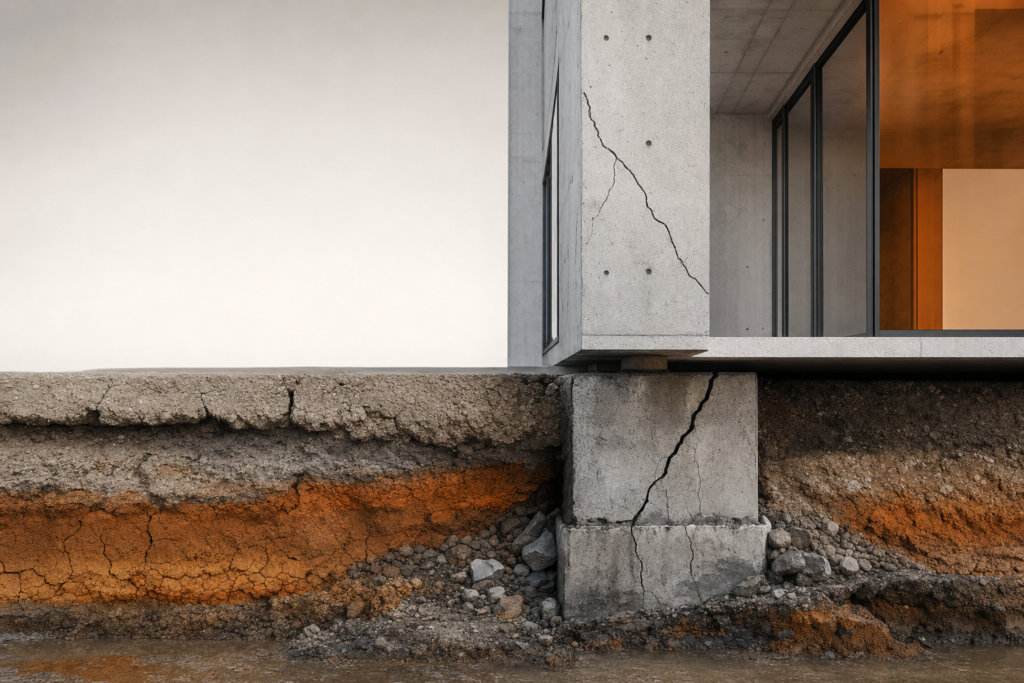
What is Foundation Failure Causes
Foundation failure occurs when the supporting base of a structure can no longer bear the load, leading to structural damage or collapse. Understanding foundation failure causes is essential for architects, interior designers, and developers to design safe and durable buildings. Common causes include soil instability, design flaws, and environmental factors such as water infiltration and vegetation effects.
A famous example illustrating the consequences of foundation failure is the Leaning Tower of Pisa, which began tilting due to weak, compressible soils beneath its foundation. This highlights the critical importance of thorough geotechnical analysis to prevent such issues.
Subsidence vs Heave vs Settlement
Foundation problems often arise from ground movements categorized as subsidence, heave, or settlement, each affecting structures differently.
- Subsidence is the downward sinking of the ground, often caused by soil compaction, groundwater withdrawal, or organic material decomposition.
- Heave is the upward movement of soil, typically due to swelling of clay soils when moisture content increases.
- Settlement refers to the gradual sinking of the foundation as the soil consolidates under load.
Each condition can cause different types of cracks and structural damage. For instance, shrink-swell clay behavior leads to alternating subsidence and heave, causing diagonal cracks near doors and windows, a common warning sign.
Case studies demonstrate that accurately diagnosing the type of ground movement is crucial for effective remediation. Buildings affected by subsidence may require underpinning, while those suffering heave might need moisture control around foundations.
Soil and Groundwater Risks
Soil type plays a pivotal role in foundation stability. Clay soils, known for their shrink-swell properties, pose significant risks as they expand when wet and shrink when dry, exerting stress on foundations.
Groundwater levels also impact foundation integrity. Excessive withdrawal can cause subsidence, damaging foundations and infrastructure. The USGS report explains how subsurface movements from groundwater changes lead to land subsidence, affecting buildings and utilities.
A common pitfall is relying on incomplete soil reports that miss critical data about soil variability or groundwater conditions. To avoid this, thorough soil report analysis and geotechnical investigations are necessary before design and construction.
Trees and Drainage
Vegetation and drainage are often overlooked contributors to foundation issues. Tree roots can extract moisture from clay soils, causing localized subsidence near foundations. Similarly, drainage leaks can saturate soils unevenly, leading to instability.
Managing vegetation involves maintaining adequate distance between large trees and buildings and monitoring soil moisture levels. Proper drainage design prevents leaks and water pooling that might destabilize soil. Real-life incidents have shown that unnoticed drainage leaks have led to foundation failures requiring costly repairs.
What Site Investigations Miss
Site investigations are critical but often miss key elements, increasing risk. Typical oversights include inadequate soil sampling depth, ignoring seasonal groundwater variations, and failing to assess nearby vegetation impacts.
These gaps can result in unexpected soil behavior, leading to construction delays and increased costs. The CIRIA guide emphasizes that poorly scoped investigations undermine ground risk assessment and foundation design.
Recommendations include comprehensive ground investigation scopes, multi-seasonal data collection, and integrating environmental factors like trees and drainage into assessments.
Early Warning Signs
Early detection of foundation issues can save significant repair costs. Common warning signs include:
- Settlement cracks, often diagonal and near windows or doors.
- Uneven or sloping floors.
- Doors and windows that stick or fail to close properly.
Visual aids and regular monitoring help identify these signs promptly. The British Geological Survey provides detailed descriptions of such warning signs related to shrink-swell clay behavior.
Case-Study Style Failures
Examining real-world failures offers valuable lessons. The South Padre Island Ocean Tower in Texas is a notable example. This high-rise sank over a foot during construction, developing structural cracks that led to its demolition. A forensic failure analysis revealed foundation design and ground investigation deficiencies contributing to the collapse (Walter P Moore report).
Similarly, the Leaning Tower of Pisa’s tilt was caused by weak, compressible soils and inadequate foundation depth, requiring underexcavation stabilization to prevent collapse (ScienceDirect study).
These cases underscore the importance of thorough site investigation and design tailored to soil conditions.
Prevention Checklist Before Excavation
- Conduct comprehensive soil testing, including shrink-swell potential and groundwater level monitoring.
- Assess environmental factors such as nearby trees and drainage systems.
- Follow building code requirements for geotechnical investigations and foundation design (IBC Chapter 18).
- Design foundations to accommodate differential settlement and expansive soils.
- Plan drainage to prevent water accumulation near foundations.
- Engage specialists for detailed ground investigation and foundation design consultation.
This checklist aligns with expert recommendations and helps avoid common pitfalls leading to foundation failure.
People Also Asked: What is an example of a foundation failure?
A classic example is the Leaning Tower of Pisa, which began tilting due to foundation failure caused by weak, compressible soils beneath it. In modern times, the South Padre Island high-rise in Texas experienced foundation failure during construction, sinking and cracking before eventual demolition. Both cases highlight critical foundation failure causes related to soil and design issues.
Next Steps for Further Learning
To deepen your understanding, explore detailed guides on site investigation techniques and foundation design best practices. Consulting with geotechnical experts early in your projects can ensure comprehensive assessments and tailored solutions. For more insights, visit authoritative resources linked throughout this article to enhance your expertise in preventing foundation failures.
