Introduction to Vo Trong Nghia Architects
Founded in 2006, Vo Trong Nghia Architects (VTN Architects) has become a beacon of innovation in Vietnamese architecture, especially renowned for its pioneering work in bamboo architecture. This firm has garnered major awards and recognition for its commitment to green design and sustainable building methods, positioning itself as a leader in integrating traditional materials with modern engineering.
VTN Architects’ projects often blend cultural motifs with cutting-edge sustainable practices, influencing the broader landscape of Vietnamese architecture and inspiring architects globally to reconsider bamboo as a serious structural material. Their dedication to bamboo architecture not only honors local heritage but also pushes the boundaries of what is possible with renewable materials.
Why Bamboo is Structurally Interesting
Bamboo stands out in construction due to its exceptional strength-to-weight ratio, often outperforming traditional materials like steel and concrete on this metric. This makes it an ideal candidate for lightweight structures that require long spans without heavy foundations.
One of the reasons bamboo is structurally compelling is its natural tubular shape, which provides excellent resistance to bending and compression forces. This geometry allows for efficient load distribution, making bamboo suitable for a variety of architectural applications.
Moreover, bamboo’s rapid renewability and low environmental footprint contribute to its sustainability credentials, making it a material of choice for eco-conscious projects. Its use supports reduced carbon emissions and promotes a circular economy in the construction sector.
Bamboo Material Properties
Physically, bamboo is a grass with a hollow cylindrical form that combines high tensile strength with flexibility. Its tensile strength can rival that of steel, which is remarkable for a natural material. This mechanical characteristic allows bamboo to withstand dynamic loads, such as wind or seismic activity, effectively.
Another advantage is bamboo’s fast growth cycle, reaching maturity in just three to five years, far quicker than traditional timber. This rapid growth makes bamboo a highly renewable resource, aligning well with sustainable design principles.
Engineered bamboo products, such as laminated bamboo panels and structural composites, further enhance its applicability by providing consistent quality and improved durability. These innovations expand the possibilities for bamboo in modern construction beyond traditional uses.
Connection and Preservation Challenges
Despite its many advantages, bamboo presents unique challenges in joinery and preservation. Traditional joinery techniques, such as lashing with ropes or using bamboo pins, require careful craftsmanship to maintain structural integrity without damaging the culms.
Preservation against pests and decay is critical, especially in tropical climates where humidity and insects pose significant risks. Treatments like boron-based preservatives and natural oils are commonly used to enhance bamboo’s durability, preventing deterioration over time.
Engineering solutions often combine these preservation methods with innovative connection designs to ensure longevity. For example, the use of mechanical fasteners that avoid splitting the bamboo culms, paired with protective coatings, can significantly improve service life in tropical architecture.
Key Bamboo Projects by Vo Trong Nghia
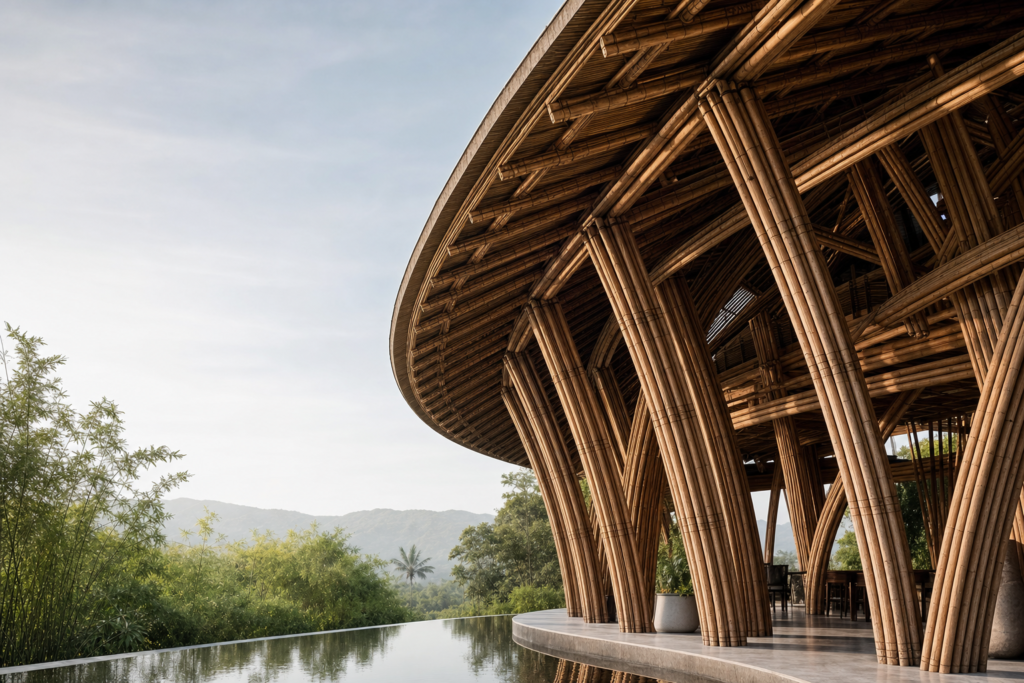
One standout project by VTN Architects is the Grand World Phu Quoc Welcome Center in Vietnam. This large-scale project utilizes an impressive 42,000 bamboo culms, showcasing the material’s scalability. The design incorporates cultural motifs and natural ventilation strategies, with bamboo-pin and rope connections exemplifying traditional joinery adapted for modern use.
Another notable project is the Bamboo Wing, which features sweeping bamboo structures that demonstrate the material’s flexibility and strength. These projects highlight how bamboo structures can be both aesthetically pleasing and functionally robust, reinforcing bamboo’s viability in contemporary Vietnamese architecture.
Climate and Cultural Context
Vietnam’s tropical climate heavily influences the choice of building materials, favoring those that perform well under high humidity and temperature fluctuations. Bamboo’s natural breathability and resistance to heat make it an excellent fit for tropical architecture.
Culturally, bamboo holds a significant place in Vietnamese tradition, symbolizing resilience and simplicity. Its historical use in housing and crafts informs modern sustainable design practices, creating a harmonious link between past and present.
This cultural context enriches bamboo architecture, embedding sustainability within a framework that respects heritage while addressing environmental challenges.
Lessons for Contemporary Sustainable Design
Bamboo architecture offers valuable lessons for sustainable design today. It emphasizes the use of renewable materials, local sourcing, and designs that respond to climate and culture. One key principle is designing for adaptability—if a project site is in a tropical environment, bamboo’s natural properties can be leveraged to reduce reliance on mechanical cooling systems.
Scalability is another lesson; as shown by VTN Architects’ projects, bamboo can be used effectively in both small-scale and large-scale constructions. This adaptability makes bamboo a versatile option for diverse sustainable design needs.
Environmental benefits include carbon sequestration during growth and reduced embodied energy compared to conventional materials, making bamboo a strong candidate for projects aiming to minimize ecological impact.
Engineering Takeaways
From an engineering perspective, bamboo requires specialized knowledge in grading, connection design, and durability considerations. The Manual on Design of Bamboo Structures provides insights into bamboo’s mechanical characterization and best practices for its use in mainstream construction.
Key innovations include developing standardized grading systems to ensure consistent strength and designing connections that accommodate bamboo’s anisotropic nature. Durability strategies, such as applying preservatives and designing for moisture control, are crucial to long-term performance.
Architects and developers should consider these factors to successfully integrate bamboo into their projects, balancing aesthetics, functionality, and longevity.
People Also Asked: What are disadvantages of bamboo houses?
Common concerns about bamboo houses include durability issues, particularly susceptibility to pests like termites and fungal decay. Untreated bamboo can degrade rapidly in tropical environments, compromising structural integrity.
However, treatment methods such as boron-based preservatives and proper curing can significantly enhance lifespan. Case studies demonstrate that treated bamboo structures maintain durability comparable to conventional materials when preservation protocols are followed.
A common pitfall is neglecting these treatments, which leads to premature deterioration. The decision rule is clear: if bamboo is used in humid or pest-prone environments, apply rigorous preservation methods; if not, risks increase substantially.
Explore Bamboo in Your Next Project
For interior designers, architects, and developers eager to explore bamboo architecture, numerous resources are available. The International Bamboo and Rattan Organization’s construction manual offers comprehensive guidance on bamboo as a renewable building material, including structural design and preservation techniques.
Engaging with experts like Vo Trong Nghia Architects can provide invaluable insights and practical experience in bamboo design. Incorporating bamboo into your projects not only supports sustainable design but also connects your work to a rich cultural and environmental legacy.
Embrace the bamboo revolution and consider how this remarkable material can transform your next architectural endeavor into a model of sustainability and innovation.
