
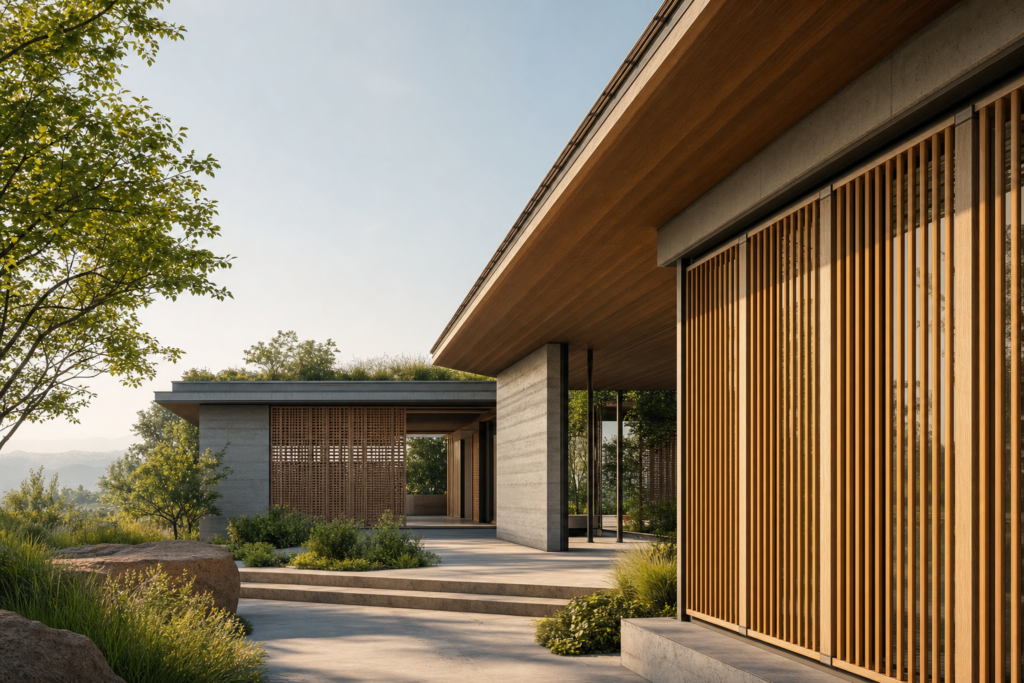
Understanding Climate-Responsive Architecture
Climate-responsive architecture refers to designing buildings that harmonize with their local climate to minimize energy use and enhance comfort. This approach leverages a building’s site, climate, and materials to reduce reliance on mechanical heating and cooling systems. Historically, many traditional designs across the world adapted naturally to their environments—think of thick adobe walls in desert regions or elevated homes in tropical zones—demonstrating early climate-adaptive strategies.
Today, climate-responsive architecture is essential for sustainable development, as it prioritizes passive design elements such as shading, glazing choices, thermal mass, and night ventilation to create comfortable indoor environments without excessive energy consumption. For a deeper dive into these principles, the Energy Saver guide on passive solar homes offers a comprehensive overview.
Why Overheating is Now a Design Problem
With global temperatures rising due to climate change, overheating risk in buildings has become a critical concern. Recent heatwaves have pushed indoor temperatures beyond comfortable and safe limits, impacting occupant health and increasing energy demand for cooling. The EPA’s climate change science page highlights how extreme heat events are becoming more frequent and intense, making resilient design strategies that mitigate overheating more urgent than ever.
Buildings designed without considering these risks may experience reduced comfort and higher operational costs. The Chartered Institution of Building Services Engineers (CIBSE) provides a professional framework for evaluating thermal comfort and avoiding overheating in low-energy buildings, emphasizing the need for proactive measures in design (TM52 guidance).
Orientation and Solar Control
Building orientation is foundational in climate-responsive design. By positioning a building to optimize solar exposure, designers can manage solar gain to reduce overheating. For example, in hot climates, minimizing west-facing glazing can prevent excessive afternoon heat, while maximizing north-facing windows (in the northern hemisphere) can harness daylight without overheating.
Effective shading strategies complement orientation. These include fixed elements like overhangs or louvers and dynamic solutions such as operable shutters. The Passive and Low-Energy Cooling guide details various shading technologies that help control solar gain, enhancing occupant comfort and reducing cooling loads.
Thermal Mass and Night Purge Ventilation
Thermal mass involves using materials that absorb, store, and release heat slowly, stabilizing indoor temperatures. For instance, concrete or stone floors can absorb heat during the day and release it at night, reducing temperature swings. When combined with night purge ventilation—flushing out warm indoor air with cooler night air—this approach provides effective passive cooling.
A practical decision rule here is: if your climate has significant diurnal temperature variation (hot days and cool nights), incorporate high thermal mass and design for night ventilation; if nights remain warm, prioritize shading and enhanced ventilation instead. Case studies show that buildings employing these techniques achieve notable energy savings and improved comfort (PNNL resource guide).
Envelope, Glazing, and Airtightness Choices
The building envelope acts as the barrier between indoor and outdoor environments, playing a critical role in climate responsiveness. Selecting appropriate materials and technologies for walls, roofs, and windows influences thermal performance and airtightness, directly affecting energy efficiency and occupant comfort.
High-performance glazing options can reduce unwanted solar heat gain while maximizing natural light. Airtight construction prevents infiltration of hot or cold air, reducing energy waste. The Energy Department’s guidance on building envelopes provides detailed considerations for achieving insulation and air-barrier continuity, essential for resilient and low-energy buildings.
Landscape and External Shading
Landscaping is more than aesthetics; it’s a strategic tool for temperature regulation. Trees and vegetation provide natural shading, cooling the air through evapotranspiration and blocking direct sunlight. External shading devices such as pergolas, awnings, and brise-soleils further reduce solar gain on façades and windows.
Integrating landscape design with building orientation enhances overall performance, lowering cooling demands. Studies demonstrate that well-planned external shading can reduce indoor temperatures significantly, contributing to occupant comfort and energy savings (PNNL passive cooling strategies).
Retrofit Implications
Retrofitting existing buildings to improve climate responsiveness presents both challenges and opportunities. Common hurdles include integrating new insulation or windows without compromising architectural integrity, and managing costs. However, upgrades such as high-performance envelopes, improved insulation, better windows, and air sealing can drastically enhance resilience to overheating and extreme temperatures.
A recent report on resilient retrofits highlights successful case studies where retrofit projects balance cost and benefit effectively, enabling existing buildings to meet modern climate challenges.
Design Checklist for Heat-Resilient Buildings
For professionals seeking to implement climate-responsive design, consider this practical checklist:
– Optimize building orientation to minimize unwanted solar gain.
– Incorporate shading devices tailored to local solar paths.
– Use materials with appropriate thermal mass to stabilize indoor temperatures.
– Design for night purge ventilation when climate permits.
– Select high-performance glazing that balances daylight and heat control.
– Ensure airtight construction to reduce infiltration and energy loss.
– Integrate landscaping and external shading for natural cooling benefits.
– For retrofits, assess existing envelope performance and prioritize cost-effective upgrades.
This checklist synthesizes best practices found in authoritative resources and real-world examples, providing a clear roadmap for creating buildings that are both comfortable and energy-efficient.
Explore Further Climate-Responsive Design Techniques
To deepen your expertise, engage with professional communities and explore specialized resources. Organizations like CIBSE offer extensive knowledge portals and guidelines. Additionally, exploring courses and guides such as those provided by the U.S. Department of Energy can expand your understanding of passive design strategies.
Continuing education and collaboration with peers are vital to mastering climate-responsive architecture and advancing resilient, sustainable building practices.
Embracing these new rules of climate-responsive architecture empowers designers and developers to create buildings that not only withstand rising temperatures but also promote healthier, more energy-efficient environments. Start integrating these principles today to lead the way in resilient design.
