
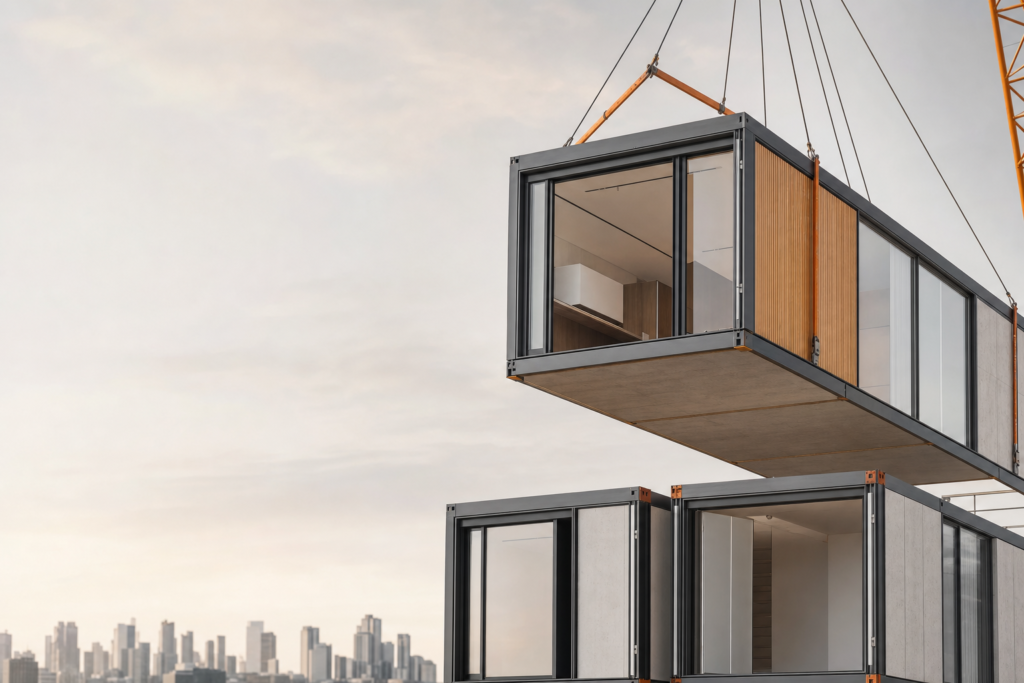
Define Modular Construction
Modular construction is a modern building method where structures are manufactured offsite in controlled factory settings and then transported to the final location for assembly. Unlike traditional construction, which is predominantly site-built, modular construction relies on prefabrication, meaning components or entire modules are produced in advance and assembled later. This approach includes key terms such as offsite construction and prefabrication, which emphasize the shift from onsite labor to factory-based manufacturing.
Historically, modular construction has been used in various forms for decades, evolving from simple prefabricated homes to complex volumetric modules that can include entire rooms with finishes and utilities. Examples include modular hotels and multi-unit residential projects, showcasing its adaptability across building types.
The Promise of Speed and Quality
One of the most compelling advantages of modular construction is the potential for significantly faster project timelines. Because modules are built indoors, construction can proceed simultaneously with site preparation, reducing overall schedules. Additionally, factory-controlled environments help mitigate weather-related delays common in traditional methods.
Quality control is another strong promise. Factory settings allow for precise manufacturing processes, consistent inspections, and standardized materials, which can lead to higher quality outcomes compared to variable onsite conditions. For instance, volumetric modular construction, where entire rooms or units are fully assembled offsite, benefits from stringent quality checks before delivery.
Case studies reveal time savings of up to 30-50% compared to conventional builds, thanks to overlapping site and factory work. These benefits make modular construction attractive for developers aiming to accelerate delivery without sacrificing quality.
Modular Types and Terminology
Understanding the terminology within modular construction is essential for professionals navigating this field. Two primary types are volumetric modular and panelised systems. Volumetric modular involves complete three-dimensional units built offsite, while panelised systems focus on flat components like walls and floors that are assembled onsite.
Modern Methods of Construction (MMC) is an umbrella term that includes modular and other innovative building approaches designed to improve efficiency and sustainability. The UK government’s MMC guidance note provides detailed definitions and examples, helping architects and developers differentiate between these methods.
Real-world applications include volumetric modules for student housing and panelised systems for residential homes, each suited to different project requirements and scales.
Logistics and Transport Constraints
Despite its advantages, modular construction faces significant logistical hurdles. Transporting large, bulky, and sometimes delicate modules from factories to sites can be challenging, especially in dense urban areas with narrow streets and limited access.
These constraints impact delivery schedules, increase costs, and require careful coordination. For example, modules must often be transported during off-peak hours or require special permits, complicating project logistics. Additionally, onsite storage space is limited, necessitating just-in-time deliveries to avoid congestion and damage.
Innovations such as modular stacking and improved packaging aim to mitigate these issues, but logistics remain a key barrier to widespread adoption. A detailed analysis in a research paper highlights how these challenges affect inventory management and site operations, emphasizing the need for early logistical planning.
Planning and Procurement Friction
The planning system and procurement processes introduce further friction for modular projects. Regulatory frameworks often lag behind construction innovations, leading to delays in approvals and permitting. Modular construction requires earlier design decisions and tighter coordination among stakeholders compared to traditional builds, as highlighted in the AIA’s guide.
Procurement complexity arises from sourcing standardized modules that meet diverse project specifications, which can be difficult when supply chains are not yet fully mature. These factors contribute to extended project timelines and increased risk, as reported in UK Parliament findings on MMC adoption barriers.
Factory Economics and Demand Risk
Economically, modular construction depends heavily on factory utilization and steady demand. Factories require high upfront capital investment for equipment and facilities, making consistent project flow critical for profitability. Demand volatility poses a significant risk; if orders fluctuate, factories may operate below capacity, driving up per-unit costs.
Market trends indicate that scaling modular requires productized approaches and repeatable designs to optimize factory economics, as detailed in the McKinsey report. Decision rule: if a developer has multiple similar projects, modular construction can reduce costs; if projects are highly customized, traditional methods may be more economical.
Where Modular Works Best
Modular construction excels in environments where repeatability, speed, and quality control are paramount. Residential sectors, including multi-family housing and student accommodations, benefit from volumetric modular approaches. Commercial projects such as hotels and healthcare facilities also leverage modular for faster delivery and minimized disruption.
Comparative analyses show that modular works best when site constraints and labor shortages make traditional construction slower or more expensive. For example, a modular hotel project in an urban area reduced construction time by 40%, illustrating the method’s strengths.
Adoption Barriers Scorecard
Several barriers impede modular construction’s mainstream adoption. Key challenges include:
- Planning and regulatory delays: Inflexible approval systems slow project starts.
- Logistics constraints: Transport and site access issues increase complexity.
- Supply chain and procurement: Limited standardization raises costs.
- Skills shortage: Workforce unfamiliarity with modular techniques.
- Financial risk: High capital investment with uncertain demand.
A UK Parliament report provides an insightful scorecard evaluating these barriers, underscoring that overcoming them requires coordinated industry and policy efforts.
People Also Asked: What Are Main Challenges of Modular Construction?
The primary challenges of modular construction include logistical difficulties, planning and procurement friction, factory economics, and demand risk. Projects often face transport restrictions for large modules, regulatory hurdles, and the need for early design finalization. Additionally, fluctuating market demand can threaten factory viability.
To overcome these, experts recommend early stakeholder coordination, investing in supply chain maturity, and adopting standardized designs where possible. Real-world projects that navigated these challenges successfully demonstrate that modular construction’s benefits can be realized with strategic planning and industry collaboration.
Explore Further: Next Steps in Modular Construction
For interior designers, architects, and developers interested in modular solutions, engaging with industry resources is a valuable next step. Consider exploring detailed guides like the AIA modular construction practice guide and attending relevant conferences or webinars to stay updated on innovations and best practices.
Building networks with modular manufacturers and logistics experts can also provide practical insights tailored to specific project needs. By deepening knowledge and fostering collaboration, professionals can better evaluate when and how modular construction fits their portfolios.
Modular construction holds significant promise, but realizing its full potential requires understanding its complexities and thoughtfully navigating its challenges.
