Understanding the Builder-Designer
The term “builder-designer” captures a growing breed of advanced DIY enthusiasts who seamlessly combine the roles of both designer and builder. Unlike traditional DIYers who might tackle small home projects, builder-designers engage in complex construction tasks, applying architectural principles alongside hands-on building skills. This evolution reflects a shift from casual weekend projects to serious, professional-grade construction ventures.
Builder-designers require a diverse skill set, including knowledge of architectural drawings, structural principles, and modern construction techniques. Interior designers and architects find this concept particularly appealing as it bridges the creative design process with practical execution, often leading to highly customized and efficient results.
For example, a self-builder might design a home extension with precise detailing borrowed from architectural standards, then personally oversee or execute the construction, ensuring both vision and build quality align. This hybrid approach is increasingly recognized in the industry as a new project delivery model akin to design-build, where one party manages both design and construction responsibilities, as explained by the American Institute of Architects.
Why Advanced DIY is Professionalising
Several factors drive the professionalization of advanced DIY construction. The availability of sophisticated tools once reserved for contractors, such as digital measuring devices and high-performance adhesives, empowers serious self-builders to achieve precision and durability comparable to professional projects.
Consumer expectations have also shifted. Homeowners now demand higher quality finishes, energy efficiency, and compliance with building codes, pushing DIYers to adopt professional standards. Online communities and educational platforms provide access to expert knowledge, tutorials, and peer support, fostering a culture of learning and continuous improvement.
Research from the Harvard Joint Center for Housing Studies highlights this trend, showing increased spending and complexity in DIY remodeling projects that blur the lines between amateur and professional work.
Tools and Methods Serious Self-Builders Now Use
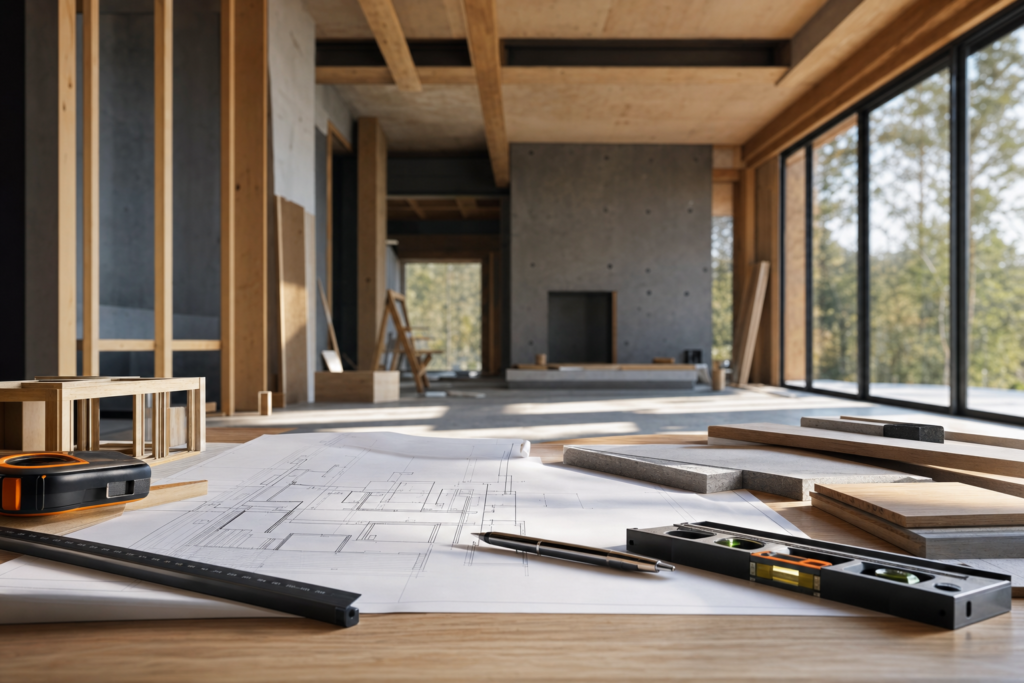
Advanced DIYers now routinely employ tools and methods that enhance accuracy and structural integrity. Digital angle finders and laser levels ensure precise alignment, while pneumatic fasteners speed up assembly without sacrificing strength. Structural adhesives complement mechanical fasteners, improving load transfer and reducing long-term wear.
Methods such as advanced house framing, detailed in the Department of Energy’s guide, optimize material use and enhance insulation performance. Serious self-builders also adopt construction detailing standards from contractors, including careful load transfer and insulation strategies described by Building Science Corporation.
For instance, a self-builder might use precision leveling tools to ensure floor joists are perfectly aligned before applying structural adhesives, resulting in a stronger, more stable floor system. These tools and methods make a tangible difference in project outcomes, reducing errors and rework.
Where DIY Still Needs Professional Input
Despite these advances, certain project aspects still require professional expertise. Complex architectural drawings often demand licensed architects or engineers to ensure compliance with structural codes and safety standards. Building regulations approval, as outlined by the UK government, is mandatory for many alterations and must be navigated carefully.
Moreover, risks arise when DIYers attempt work beyond their expertise, such as electrical wiring or load-bearing modifications. Consulting professionals at key stages helps avoid costly mistakes and legal issues.
A practical decision rule is: if your project involves structural changes or regulated systems, engage a qualified professional; if it’s cosmetic or non-structural, advanced DIY methods may suffice.
Common Mistakes at Drawings, Structure, and Sequencing
Errors in architectural drawings, structural planning, and project sequencing often derail advanced DIY projects. Misinterpreting drawings can lead to incorrect dimensions or incompatible materials. Poor sequencing, such as installing finishes before structural elements are secured, causes delays and rework.
A common pitfall is neglecting to coordinate site activities, which the Health and Safety Executive emphasizes as critical for smooth construction phases. For example, a self-builder who fails to schedule inspections or material deliveries properly may face costly downtime.
To avoid these issues, maintain a detailed project timeline, double-check designs with professionals, and ensure each construction phase logically follows the previous one.
Examples of Builder-Designer Workflows
Builder-designers typically follow workflows that integrate design, procurement, and construction management. Starting with detailed planning and design development, they then coordinate with suppliers for materials and subcontractors for specialized tasks. Throughout execution, they monitor quality and schedule adherence, adjusting as needed.
Case studies show that such integrated workflows improve efficiency and quality. For example, a self-builder managing both design and construction phases can quickly resolve onsite issues without waiting for external approvals, expediting project completion.
Site coordination, including safety planning and contractor workflows, is essential to maintain momentum and meet standards, as outlined by the HSE guidelines.
Checklist for Raising Project Standards
To elevate your advanced DIY construction, consider this checklist:
– Use professional-grade tools like digital angle finders and pneumatic fasteners.
– Adopt advanced framing and construction detailing techniques.
– Ensure compliance with building regulations and obtain necessary approvals.
– Consult licensed professionals for architectural drawings and structural assessments.
– Develop a detailed project timeline emphasizing proper sequencing and site coordination.
– Engage with online resources and communities for ongoing learning.
Users of similar checklists report smoother project flow and higher quality outcomes, reinforcing the value of structured planning and professional standards.
Exploring guides and tool reviews can further support your journey toward builder-designer proficiency.
Advanced DIY construction is no longer just about saving money or personal satisfaction—it’s about achieving professional-quality results through informed, skilled effort. Whether you’re an interior designer, architect, or developer, understanding this trend can enhance your collaboration with self-builders and inspire new project approaches.
To deepen your knowledge, explore additional educational content and consider signing up for workshops or newsletters that focus on advanced construction techniques and project delivery methods.
